

May 2026 – Google I/O transformations, WWDC 2026 highlights, and the platform strategies redefining user acquisition
- Overview:
- Google Play Shifts to Play Shorts
- Ask Play and Semantic Search
- Agentic Workflows Arrive in the Google Play Console
- Technical Compliance: The 16 KB Page Size
- WWDC 2026 and iOS 27 Review Surge
- Apple Expands Features in Core Categories
- iOS 27 Architectural Speed and Apple Intelligence APIs
- Next-Gen Store Optimization: Asset Library, Previews, and Curation
- Final Thoughts
May and early June 2026 delivered a massive wave of structural updates to both major mobile platforms, establishing a new baseline for discovery, monetization, and retention. Google I/O started the shift by integrating vertical video feeds and conversational search directly into Google Play. Apple immediately followed at WWDC 2026 with the introduction of iOS 27, unveiling structural performance optimizations and deep system-level intelligence.
For ASO specialists and mobile marketers, these simultaneous platform updates signal an intense era of competition where standard metadata optimization must adapt to conversational AI and native features. This monthly report breaks down the technical execution behind these changes and provides an operational blueprint for adapting storefront strategies to the latest Android and iOS realities.
Google Play Shifts to Play Shorts
Google Play is officially changing its visual layout with the broader rollout of Play Shorts. Announced as a major focus at Google I/O, this feature provides users with a full-screen, portrait-oriented video feed embedded directly into the store interface. The initiative aims to offer immediate, immersive glimpses of an application’s interface and core mechanics before a user views the product page.

This update updates the visual hierarchy of App Store Optimization on Android. Historically, promotional videos on Google Play were secondary assets, often relying on landscape formats tied to YouTube links. Play Shorts demands an entirely different creative production pipeline. Growth teams must produce vertical video content optimized to convey value within the first three seconds of playback.
Static screenshots and traditional feature graphics are losing their absolute dominance over conversion rates. Because this feed adopts the consumption mechanics of popular social video networks, creative assets must feel dynamic rather than corporate. We expect that applications deploying crisp, engaging Play Shorts will experience a significant advantage in explore traffic conversion. Currently available to US users and a restricted group of developers, this format will inevitably expand. Teams globally should begin auditing their video production pipelines immediately to prepare for wider deployment.
Ask Play and Semantic Search
Google is also embedding Gemini deep into the core search journey of Google Play. While previous iterations focused on basic text summarizing on individual listings, the newly introduced Ask Play transforms store discovery into a multi-turn conversational experience. Users are no longer restricted to typing exact, rigid keyword phrases. Instead, they can ask open-ended questions, request highly specific comparisons, and refine their queries through dialogue.

This represents an important change in how the store algorithm evaluates intent. Traditional keyword optimization prioritized exact-match placement and keyword density within descriptions. Ask Play requires a transition to deep semantic optimization. The internal search engine now parses the underlying context of a user’s prompt and matches it against the entire semantic cluster of your store listing.
Copywriting strategies must pivot to address this shift. Descriptions should focus on describing user scenarios and specific problem-solving workflows using natural, conversational language. Long-tail keyword architecture is becoming highly valuable. If a user asks the store for a utility to manage specific dietary restrictions while logging daily activity, applications that clearly explain these exact edge cases in their text will surface ahead of those that rely on basic feature checklists.
Agentic Workflows Arrive in the Google Play Console
The backend console experience is receiving an upgrade to reduce manual engineering and marketing bottlenecks. Google introduced agentic catalog management tools within the Play Console to automate repetitive operations. Teams can now rely on built-in automation to execute massive price adjustments, manage stock-keeping units, and synchronize metadata variations across extensive regional catalogs without manual file uploads.
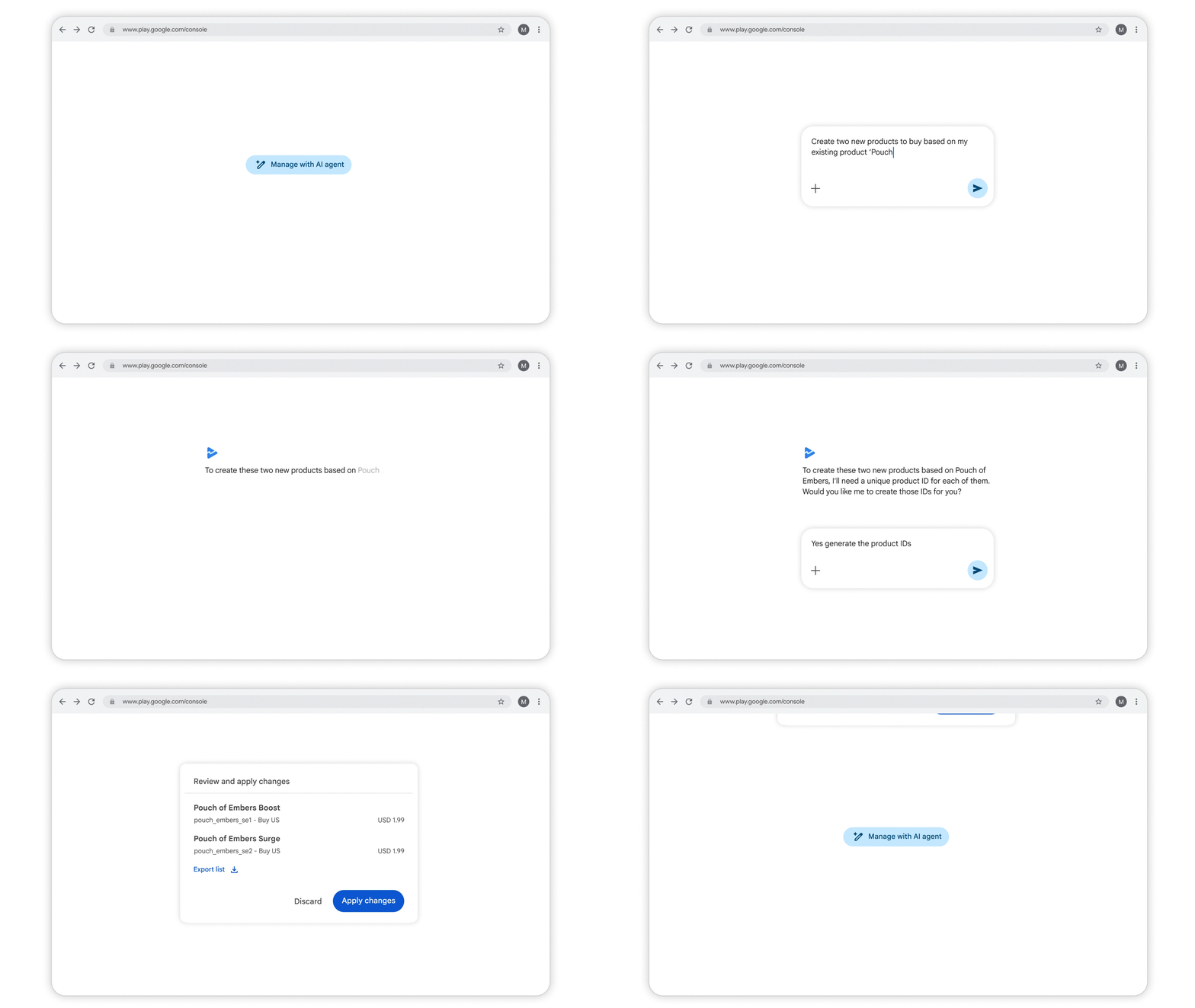
The console has also compressed the gap between search analytics and metadata deployment. When analyzing keyword performance on the Grow overview dashboard, marketers can use integrated console tools to generate customized store listing variants tailored to those high-opportunity terms. This speeds up the execution of localized A/B testing, enabling teams to build and deploy targeted variations quickly.
Reporting layers have also been deepened to capture full-funnel metrics more accurately. The console now tracks a comprehensive reach metric, enabling teams to evaluate total product visibility across every layout and section of the store. Furthermore, cart conversion rates are now accessible on the main performance dashboards. This enables product managers to see exactly where users drop off during the payment process, providing the raw data needed to improve monetization loops.
Technical Compliance: The 16 KB Page Size
Beyond marketing features, Android technical teams spent May addressing a strict performance deadline. Google Play required all incoming applications to support 16 KB memory page sizes by May 31, 2026. This fundamental modification is designed to improve system responsiveness and hardware efficiency across newer Android devices.
The implementation caused notable concern regarding the status of legacy applications. Google provided critical clarification on the enforcement mechanics. If an application did not achieve compliance by the May 31 deadline, it was not removed from the storefront. The existing production build remains live, discoverable, and fully available for user downloads.
The restriction impacts future release schedules. Developers are blocked from submitting any new app bundles or staging updates until the 16 KB page size architecture is fully implemented. For growth marketers, this demands clear alignment with technical leads. Any delay in fixing the underlying architecture completely stalls metadata updates, seasonal creative tests, and promotional store releases.
WWDC 2026 and iOS 27 Review Surge
Shifting to the iOS ecosystem, Apple opened its Worldwide Developers Conference with a series of major announcements. One of the most striking operational metrics revealed during the keynote is that developers are currently submitting approximately 1,000 applications every single hour for review on the App Store. This staggering volume highlights the intense competition for organic visibility and underscores why automated and rapid ASO deployment is mandatory to remain relevant.

The sheer volume of submissions explains why Apple is continuously refining its review algorithms and store curation mechanics. When 24,000 builds enter the platform daily, relying purely on manual curation is impossible. For marketing teams, this means that policy compliance, flawless initial metadata metadata submission, and rapid bug testing are critical. A single rejection due to broken layouts or vague privacy terms can push an update behind thousands of competing apps, causing missed launch windows and delayed acquisition campaigns.
Apple Expands Features in Core Categories
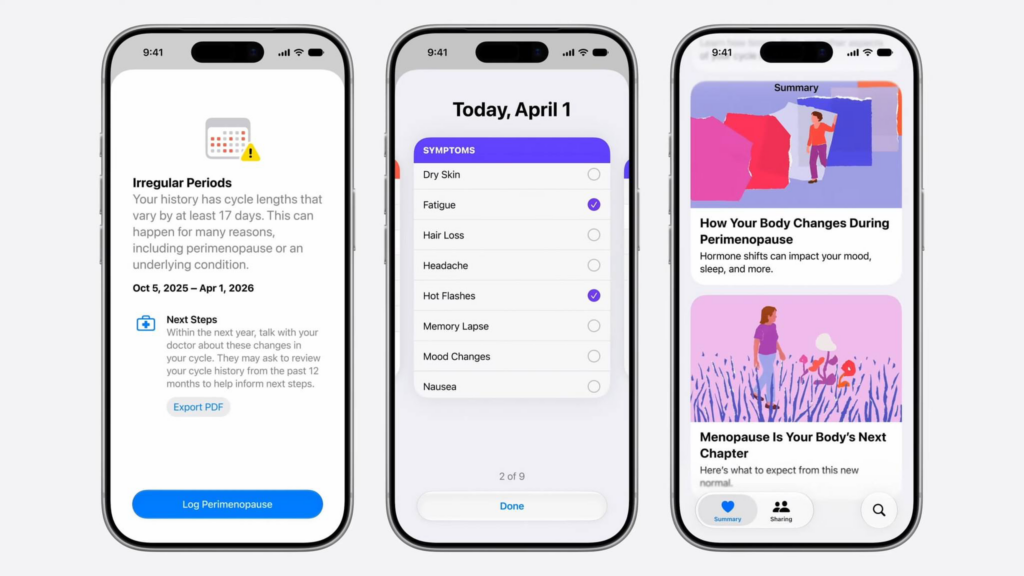
A critical trend from WWDC 2026 is Apple’s systematic expansion into software categories previously dominated by third-party utilities. With the launch of iOS 27, native apps are gaining deeper utility, directly threatening the organic market share of established products. This expansion is happening across three primary app store sectors.
First, reproductive health and wellness applications are facing immediate pressure. Apple has integrated a comprehensive period tracker directly into the native Calendar application. For established products like Flo, Clue, and Clatch, this update removes a massive layer of top-of-funnel acquisition, as casual users may find the built-in system sufficient for basic tracking needs. Growth teams in this sector must pivot their ASO and marketing messaging toward advanced analytics, specialized premium features, and medical-grade data privacy to justify a third-party installation.
Second, the parenting and screen-time category is experiencing a similar shift. Parents will now be able to monitor screen metrics, schedule device limitations, and enforce software restrictions in far greater detail natively through iCloud and screen time settings. Independent parental control and monitoring apps will need to re-evaluate their value propositions, shifting away from standard blocking tools toward unique educational components or multi-platform device support.
Third, the Photo & Video category is transforming. Apple introduced an advanced spatial editing feature where the device can determine the calorie count and nutritional information of food directly from a photo. Furthermore, the native gallery has learned to adjust shooting angles and perspective dimensions on finished photographs. Given that photo editing is already an incredibly crowded category, these native additions raise the bar for independent developers. Survival in this niche now requires immediate adaptation, hyper-specific stylistic choices, or highly specialized professional toolsets.
iOS 27 Architectural Speed and Apple Intelligence APIs
The user experience on iOS 27 has been optimized through deep system adjustments. Most notably, applications will load up to 30% faster under the new architecture. System components including the photo gallery, file managers, and AirDrop protocols have all received significant performance increases. Apple also extended this optimization backward, offering full iOS 27 support for the iPhone 11. This decision keeps a massive legacy user base active and capable of using the latest app features, preventing sudden drops in active user metrics for apps targeting older hardware.
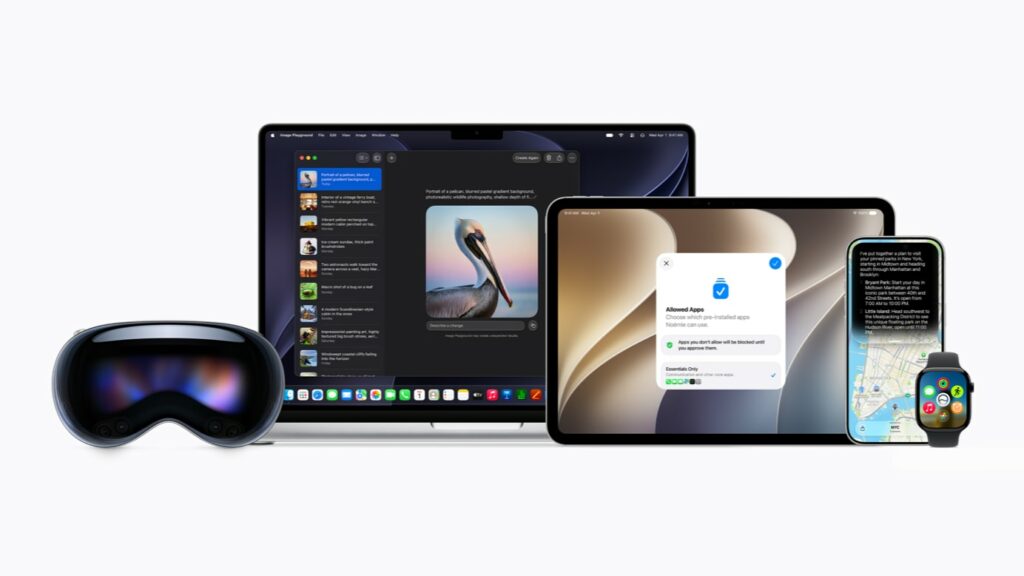
The platform search engine has also evolved. Users can now search for highly granular phrases that surface matches not just from text, but from information buried within photos and deep email threads. This changes how users locate information on their devices, creating an environment where an app’s deep links and indexable content must be perfectly structured to appear inside native spotlight results.
For developers, the immediate release of the Siri AI and Apple Intelligence APIs opens up fresh product development opportunities. Siri has been upgraded to run on Google’s Gemini backend, transforming it into a highly capable context engine. Combined with the new Liquid Glass interface, which allows users to customize layout transparency down to a solid white panel, the visual and operational identity of iOS is shifting. As these APIs go live, growth teams must ensure their apps integrate with Siri shortcuts and system intents to remain accessible via conversational voice prompts.
Next-Gen Store Optimization: Asset Library, Previews, and Curation
Apple is introducing a centralized Asset Library in App Store Connect, allowing marketing teams to store, organize, and manage all approved creative marketing assets in one unified backend repository. This storage pipeline streamlines creative production by decoupling asset uploads from rigid version release cycles. Directly linked to this repository is an upgraded Product Page Preview tool. Marketers can now preview exactly how custom product pages, deep links, and localized asset variations render across different iPhone screen formats and OS versions before submitting them to App Store review.
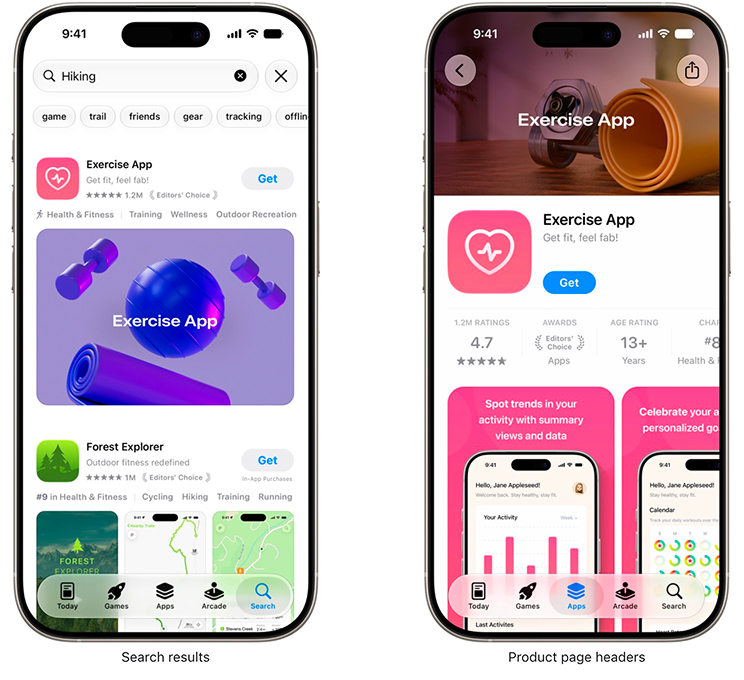
On the storefront, the search layout is moving toward algorithmic personalization with the rollout of Personalized Collections. The App Store will curate customized collections of apps and games directly on the Search and Today tabs, tailored specifically to an individual user’s historical engagement patterns, app preferences, and download history. This curatorial shift reduces the real estate available for traditional, static search listings and changes how users discover software outside of exact keyword queries.
These backend and frontend additions fundamentally modify App Store Optimization strategy. The combination of the Asset Library and advanced Product Page Previews removes structural bottlenecks, enabling growth teams to scale the volume and execution speed of conversion rate optimization tests across multiple territories. Meanwhile, the expansion of Personalized Collections means that securing an install is no longer just about optimizing your semantic core for high-volume keywords. Algorithms increasingly favor downstream retention and engagement metrics to place apps into these high-converting personalized feeds, making post-install user behavior a critical factor for driving organic platform visibility.
Final Thoughts
The concurrent updates from Google I/O and WWDC 2026 reveal a shared vision for the mobile industry, but with distinct execution models. Google is focusing heavily on modifying the storefront itself, using short-form vertical video and Gemini-driven conversational searches to change how users interact with the store catalog. Apple, by contrast, is choosing to integrate these advancements directly into the core operating system, expanding native utility and redefining search across photos, emails, and third-party apps simultaneously.
For mobile marketers, the playbook is split. On Android, you must master rich asset creation, optimize for semantic search prompts, and maintain strict technical compliance to avoid updates being blocked at the console level. On iOS, you must find ways to compete against increasingly capable native tools while optimizing your app’s internal content to be indexable by the broader system search. The platforms are moving fast, and success in the second half of 2026 depends entirely on how quickly your team can adapt to these structural updates.