
June 2026 – Tracking Google Play Algorithm Updates, Apple Ads Automation, and AI App Ranking Strategies
- Overview:
- AI Apps Are Having a Real Moment
- Google Play’s Install Counting Change
- Apple Search Ads Goes Fully Automated
- Getting Ready for iOS 27: Asset Libraries and Personalized Collections
- Social Discovery Still Ends at the App Store Search Bar
- To Sum Up: Looking at the Second Half of 2026
June gave developers a clearer read on where app store growth is actually heading. Google Play switched to account-based install counting and rolled out a new video discovery format. Apple pushed its automated ad bidding system out to every advertiser, which puts more weight on organic visibility than it’s carried in a while. And AI apps kept posting numbers that would’ve sounded made up a year ago. None of this changes the fundamentals of ASO, but it does change where the leverage points are.
AI Apps Are Having a Real Moment
The commercial pull of AI on mobile isn’t a forecast anymore, it’s just the current numbers. Sensor Tower’s State of AI 2026 report, released in mid-June, apps mentioning AI are on track for nearly 10 Billion downloads H1 2026. In-app purchase revenue from AI apps is on pace to clear $4 billion for the half, a 36% jump over H2 2025.
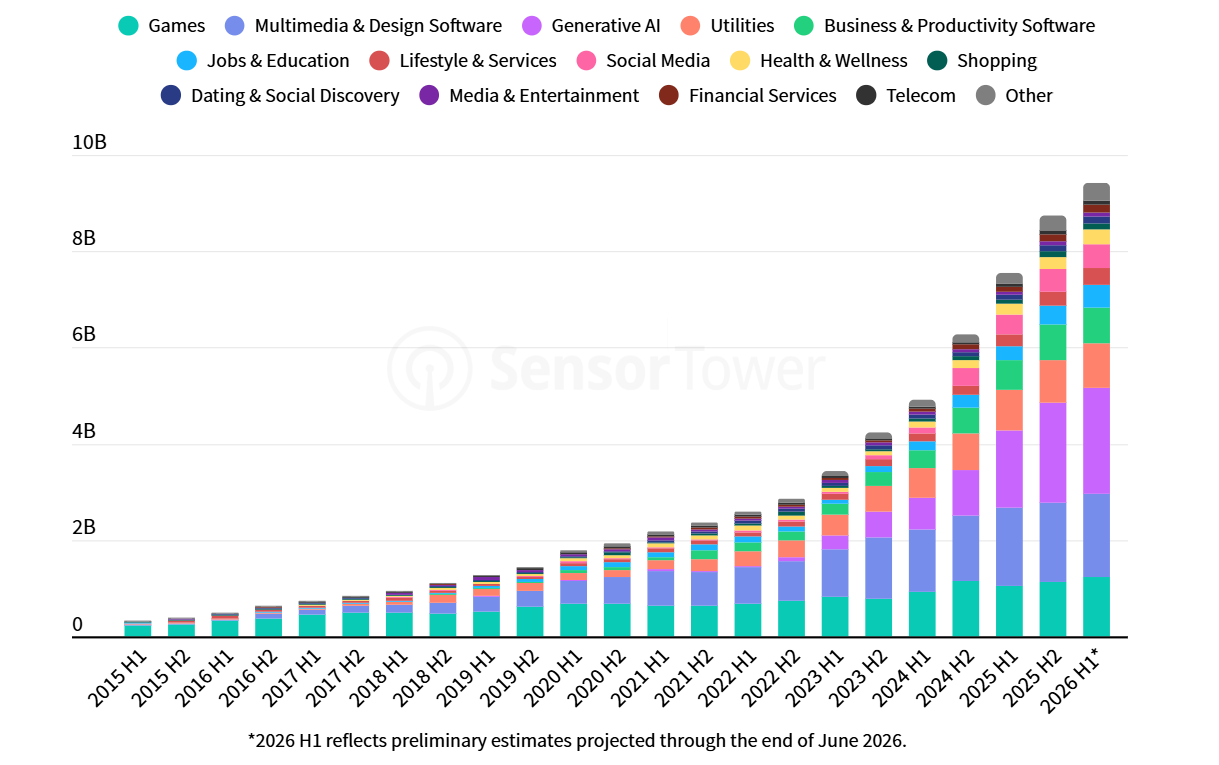
Source
The competitive picture inside that growth is shifting too. Per TechCrunch’s coverage, ChatGPT’s audience share, which held above 50% into January, had slipped to around 46% by the end of May, as Gemini and Claude picked up ground.
What matters more for most developers is what’s happening one layer down: everyday utility apps bolting AI features onto existing products. Users aren’t searching “chatbot” anymore, they’re searching “AI resume builder,” “AI photo editor,” “AI meal planner.” Those keywords are crowded now, and just putting “AI” in your title won’t move the needle on its own. Climbing for these long-tail AI keywords takes a sustained push — keyword installs against the specific phrases people are actually typing are still one of the more reliable ways to get in front of users who are already looking to pay for something.
Google Play’s Install Counting Change
Google Play made one of its more consequential changes this month: how it counts installs. Previously, device-based tracking meant one person downloading an app on their phone, tablet, and Chromebook registered as three separate acquisition events. As AppTweak’s June recap confirms, Google Play has now moved to account-based counting, so those three downloads collapse into a single install tied to one user.
Top-line numbers will look smaller for a while, especially for cross-platform games and productivity apps. But most growth teams are glad to see it go. Duplicate data disappears, ARPU calculations get more honest, and retention baselines finally reflect real people instead of inflated device counts. Knowing exactly how many humans are using your product makes every downstream growth decision easier to plan around.
Alongside the install counting change, Google launched Play Shorts — a short-form video discovery format now live in the US Play Store Apps tab. Getting featured there still comes down to the same thing it always has: Google’s algorithm needs a clear signal about what your app does and who it’s for. That signal comes largely from search behavior — what people type, and what they choose to download after typing it. Consistent, targeted installs against the right keywords help build that signal, which in turn improves your odds of surfacing in these new video slots. For a deeper dive into these Google updates and other news, check out our video.
Apple Search Ads Goes Fully Automated
On the iOS side, Apple made Maximize Conversions available to every App Store advertiser this year and confirmed the manual CPA cap is on its way out. That’s a real shift for anyone who built their bidding playbook around setting a hard price ceiling per install. Now Apple’s system flexes bids per query, aiming to hit your target CPA on average, with your daily budget doing the job the cap used to do.
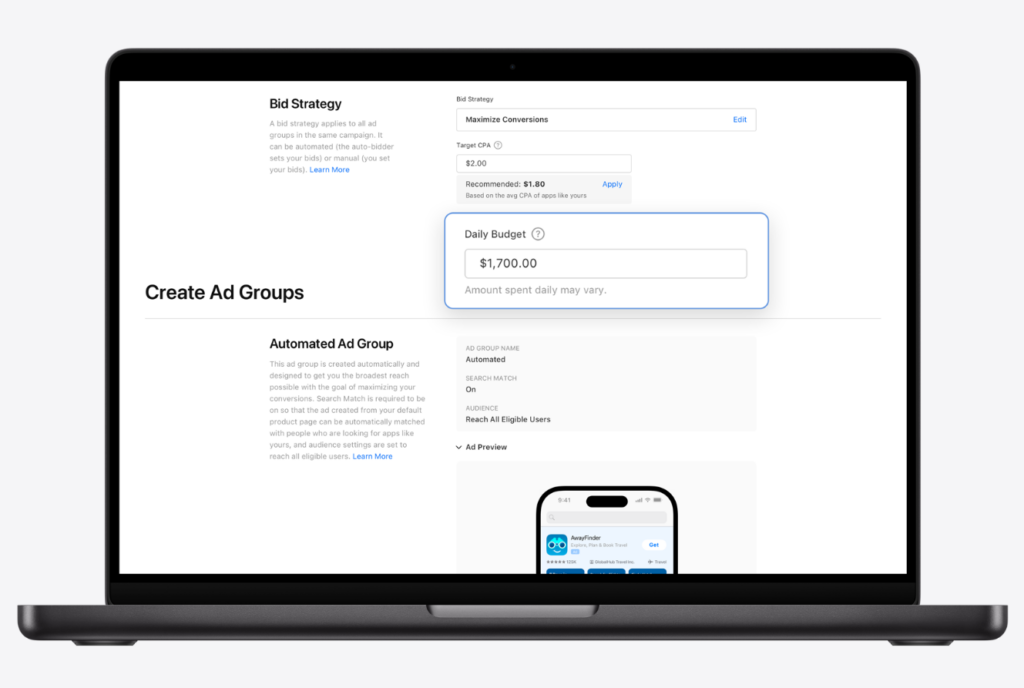
Media buyers have spent the spring and into June adjusting to less manual control, right as Apple keeps expanding paid placements further down the search results page. When paid acquisition gets more automated (and more expensive to learn) organic visibility becomes the thing you can actually still control. Every organic slot you hold onto is one less install you’re paying premium rates for. Category and keyword installs remain one of the more direct ways to support and defend those organic rankings while your paid strategy catches up to the new system.
Getting Ready for iOS 27: Asset Libraries and Personalized Collections
Although the public release of iOS 27 is still a few months away, development teams spent June analyzing the App Store updates announced at WWDC. For a detailed breakdown of the conference, check out our video. The headline for ASO is the new App Store Connect Asset Library. Design teams can now upload and manage screenshots and promotional graphics (including the new Creative Assets) in one place, without waiting on an engineer to ship a new build just to swap an image. That alone opens the door to constant creative testing instead of testing in bursts tied to release cycles.
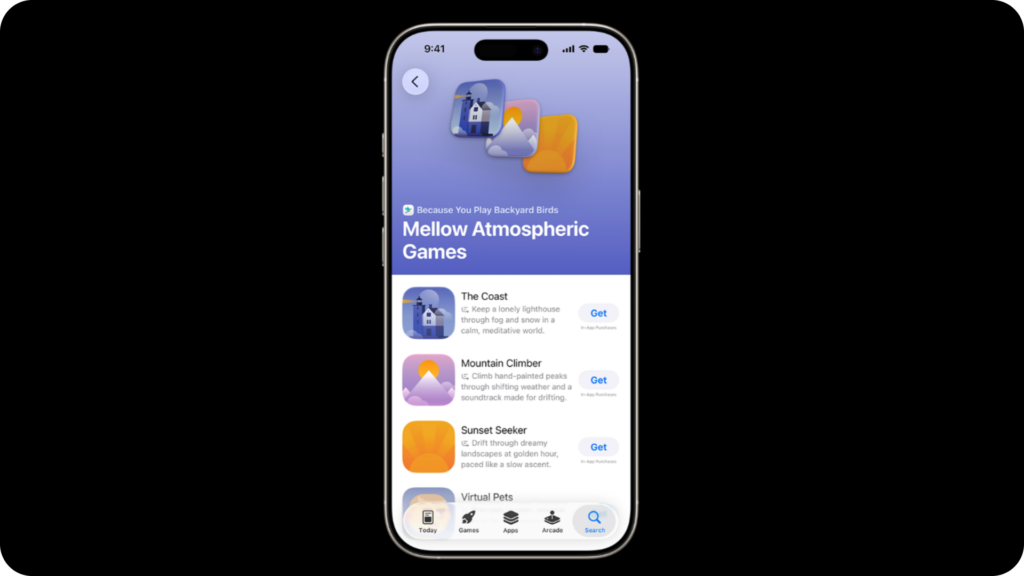
Apple’s also rolling out Personalized Collections: app recommendations built from a user’s interests, usage patterns, and download history, each paired with a short “App Note” explaining why it was suggested. Personalized Collections and App Notes started rolling out in English in the US this month, with more markets to follow.
None of this replaces category ranking or keyword visibility as the core signals feeding Apple’s recommendation logic — it just adds a layer on top. Keeping your app ranked well in its category is still the clearest path into these personalized feeds. When Apple’s algorithm sees an app climbing in its category, it reads that as relevance, and relevance is what gets you surfaced by the automated engine behind Personalized Collections. Category installs remain a straightforward lever for building that signal.
Social Discovery Still Ends at the App Store Search Bar
Outside the app stores, shopping behavior keeps moving toward social first. Per Hootsuite’s 2026 Gen Z data, 72% of Gen Z has bought a product directly through a social app, and 99% of Gen Z shoppers now use a smartphone to complete purchases.
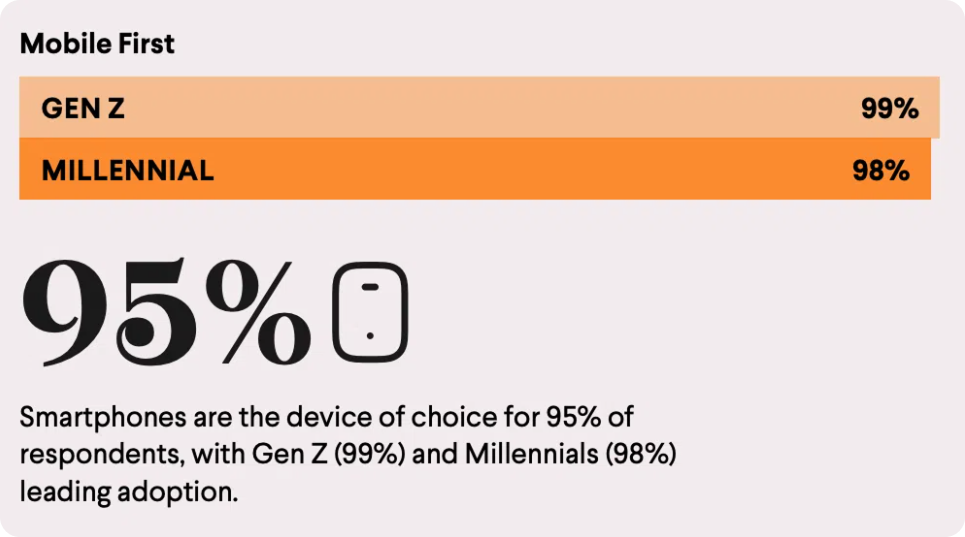
The pattern for app discovery looks similar. Someone sees an app in a TikTok or Instagram video, closes the social app, and opens the App Store or Google Play to search for it directly by name or a related keyword. If your app doesn’t rank near the top for that search, you lose that user to whoever does, even though your marketing is what put them there in the first place. Social builds the interest; the app store search bar is where the download actually happens.
Category installs and solid keyword rankings work together here. They make sure that when someone goes looking for the app they just saw on social, yours is the one they find first. Keyword installs can help smooth that handoff, catching high-intent users right as they move from the video to the store, before a competitor gets the chance.
To Sum Up: Looking at the Second Half of 2026
June confirmed something most people in this space already suspected: the core mechanics haven’t changed. Store algorithms still need clean signal to understand what an app does and who it’s for — they’re just reading that signal through more surfaces now (video discovery, personalized feeds, automated ad auctions) than they used to.
Getting through the rest of the year comes down to the same combination it always has: a product worth using, visuals that actually get tested and updated, steady category performance, and keyword and category installs that keep feeding the algorithms the signal they’re built to look for.