
What the 2026 FIFA World Cup reveals about seasonal ASO, keyword demand, and app store timing
- Overview:
- A Tournament Built on a Different Scale
- Betting and Prediction Apps Are Setting the Pace
- Precision Metadata Updates, Not Just Seasonal Banners
- Apps Outside Sports Found Their Own Angle
- Where Keyword and Category Installs Fit In
- What Holds After the Final Whistle
Six weeks into the largest World Cup ever staged, App Store data confirms what experienced mobile marketers already expected: a tournament of this size doesn’t produce a single traffic spike, it produces dozens of smaller ones tied to specific match days, host cities, and time zones. Search volume for tournament keywords has been rising since March, betting and prediction apps have posted triple-digit download growth, and apps with no connection to football have still found ways to enter the conversation. What separates the apps capturing this demand from the ones missing it comes down to timing, not budget.
A Tournament Built on a Different Scale
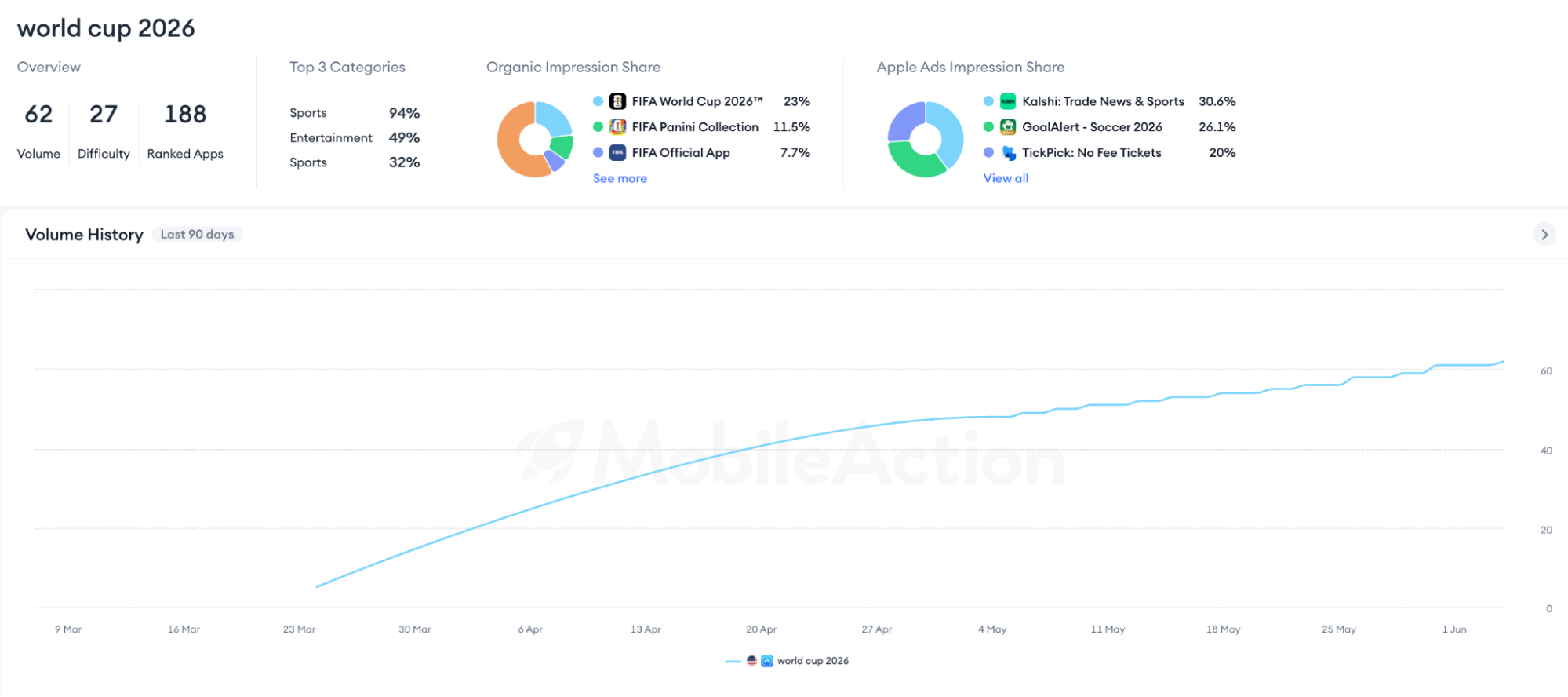
The 2026 tournament spans 48 teams, 16 host cities across the US, Canada, and Mexico, and 104 matches running from June 11 through July 19. For app marketers, the format itself changes the math: instead of a two-week burst of attention, the demand window stretches across six weeks and shifts shape as it goes. Early searches skew broad and exploratory, group-stage queries sharpen as national teams separate from the pack, and knockout-round searches turn urgent. MobileAction’s tracking confirms this: search volume for “world cup 2026” has climbed steadily since late March, and 188 apps are now competing for visibility on that single keyword.
Source
Betting and Prediction Apps Are Setting the Pace
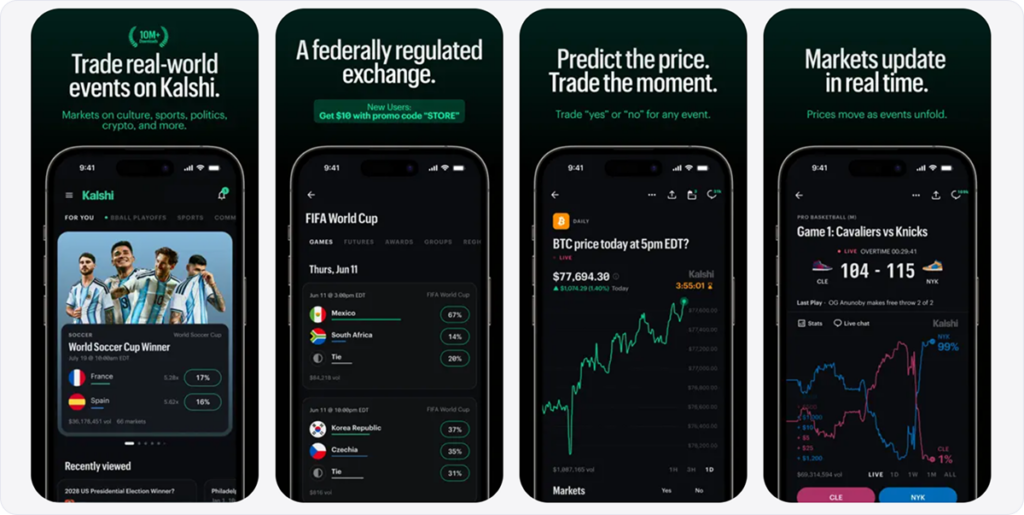
Sports betting and prediction markets show this shift most clearly. Since the tournament opened, prediction platforms have overtaken traditional sportsbooks in download share, with Kalshi leading the category. The download numbers only tell part of it: Kalshi also holds a stronger Apple Ads impression share on the keyword “world cup” than the official FIFA app. Only 14 apps are currently bidding on that keyword, against 179 ranking for it organically, a gap that leaves real paid opportunity open for any app that can make a credible case for tournament relevance.
Source
Kalshi’s approach was to rebuild its entire App Store presence around the tournament rather than bolt on a seasonal banner. Title, subtitle, screenshots, and a dedicated custom product page all lead with World Cup content, despite the app being a general prediction and trading platform with no football connection on paper. The lesson generalizes well beyond betting apps: the tie-in doesn’t need to live in the product itself, it needs to be unmistakable in the metadata the moment someone lands on the page.
Precision Metadata Updates, Not Just Seasonal Banners
A handful of metadata updates from this tournament show real precision rather than seasonal enthusiasm. FOX One rewrote its subtitle in late May, dropping NASCAR entirely in favor of “MLB, INDYCAR, FIFA World Cup™,” and rebuilt its description to open with the tournament instead of burying it under a general sports mention. Fanatics Sportsbook made a comparable move: its description used to lead with NBA Playoffs messaging, and now opens with a dedicated soccer and World Cup betting section, while the core promotional offer underneath stayed exactly the same. FotMob went further on the visual side, replacing its entire screenshot set with World Cup branding on a dark navy background, group-stage fixtures front and center, so the app answers a searcher’s question before they read a single word of copy.
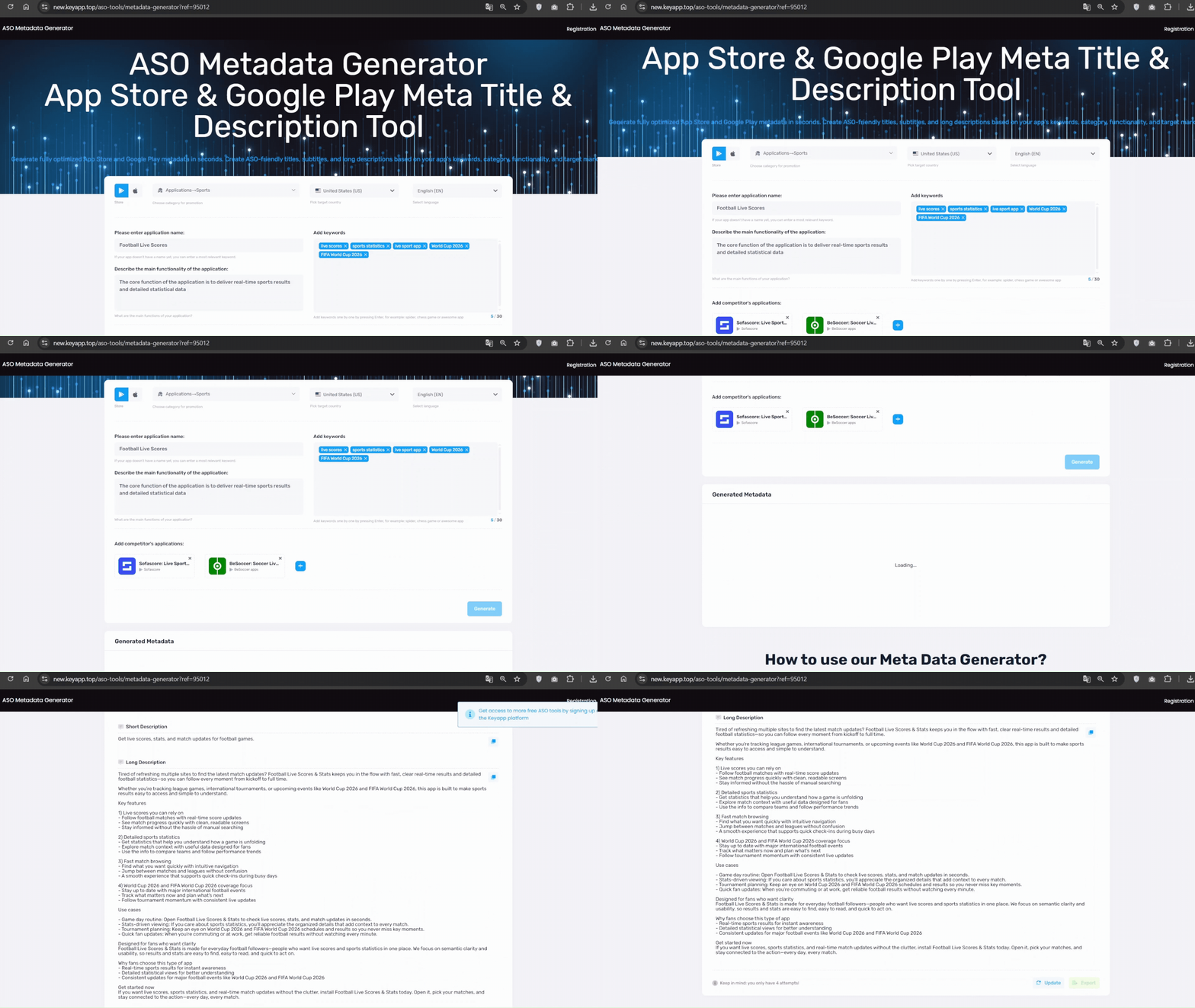
Rewriting a title, subtitle, and keyword field this precisely for a six-week window doesn’t have to start from a blank page: Keyapp’s free Metadata Generator drafts tournament-ready title, subtitle, and keyword combinations from an app’s existing listing, giving teams a working starting point instead of editing live metadata by trial and error.
Source
None of these apps waited for kickoff to make these changes, and the same pattern holds outside football. HBO Max applied the same logic during March Madness, updating its metadata to rank for tournament keywords ahead of peak demand instead of reacting once competition had already tightened. That gap, doing the keyword and metadata work before the crowd arrives, is consistently what separates apps that convert well during high-demand windows from apps that are simply louder than everyone else.
Apps Outside Sports Found Their Own Angle
Some of the sharper moves came from apps with no obvious tournament connection at all. Duolingo ran a limited-time “Duo Cup” event to pull lapsed users back in. Pinterest, with no football affiliation whatsoever, built a soccer-themed event card around style and recipe inspiration and earned a featuring placement for it. Royal Match and Candy Crush both leaned on generic seasonal copy, “Play the Royal Cup,” “Play Soccer Season,” without naming the tournament directly, which let them borrow the moment’s energy without overcommitting their brand to it.
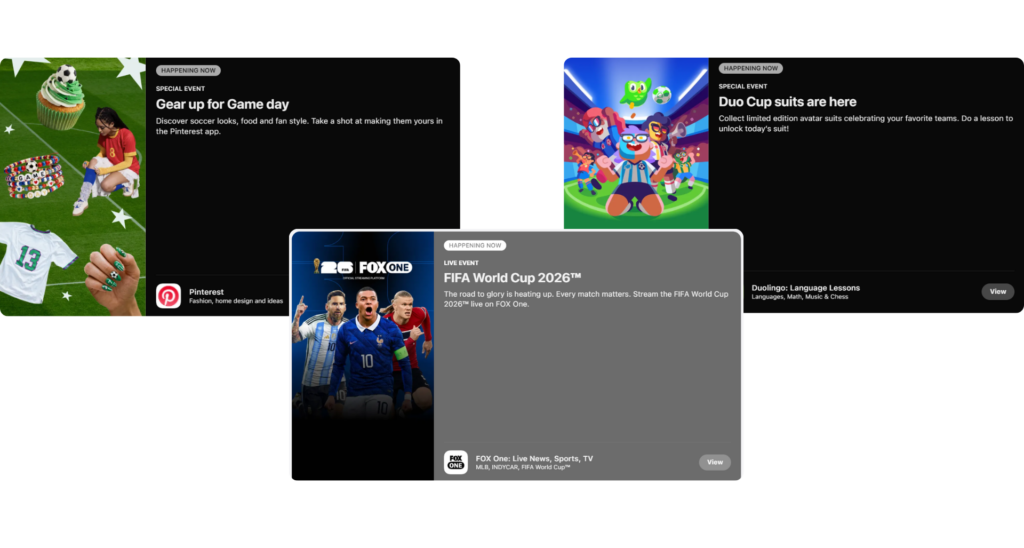
In-app events followed the same logic across categories. DoorDash launched a “Pick the champion” competition tied to the tournament, requiring one qualifying order to participate, nested under its broader summer loyalty campaign. It’s a small mechanic, but it connects a football moment to the one action that actually matters for DoorDash’s business: placing an order. TSN, Canada’s official broadcaster, took a more direct route with a live “FIFA World Cup 2026™” event built around match access, timed to reach users searching for live sports coverage the moment they need it. Both events make the same point: an in-app event earns its spot on the product page when it’s tied to a real action inside the app, not when it’s just a seasonal skin on the icon.
Where Keyword and Category Installs Fit In
Across every example above, the same conclusion holds: visibility during a tournament like this is decided mostly by what happened before it, not during it. Apps that entered June with solid keyword rankings and category positioning already in place had a real head start once search volume spiked, because the App Store’s algorithms were already reading them as relevant to the moment.
A structured install strategy is what actually puts that head start to work. Running Keyapp’s keyword installs against tournament-specific terms builds the kind of early organic signal that helped HBO Max and FOX One rank before demand peaked, without relying on paid placements alone. Category installs work alongside that by helping an app climb inside its broader category page, which matters because category authority is part of what tells the algorithm an app belongs in front of tournament searchers in the first place. Because Keyapp runs campaigns across 200+ GEOs, the same keyword and category campaigns can be localized market by market, useful given how unevenly World Cup search demand spreads once national teams start advancing.
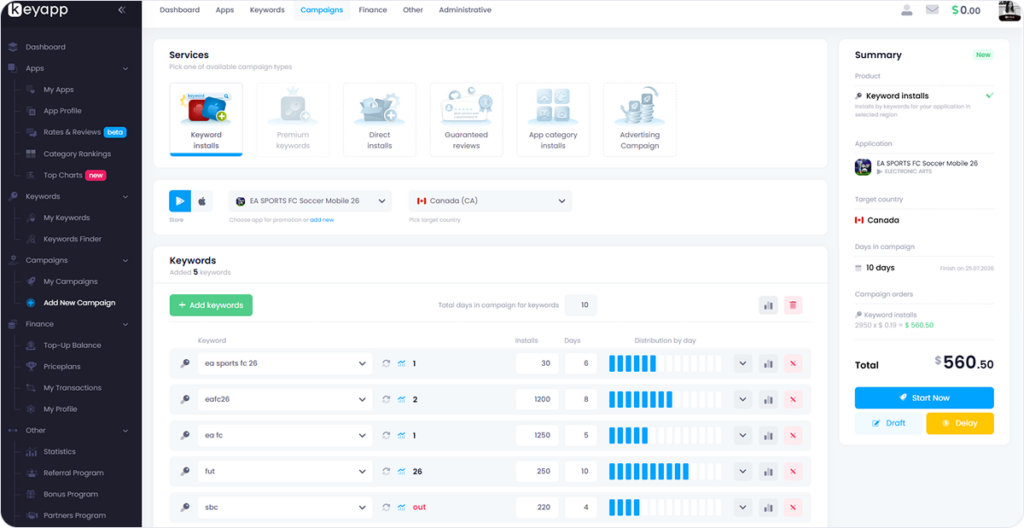
Before committing budget to any of these terms, it’s worth checking them against Keyapp’s free ASO tools first. The Keyword Research and Keyword Finder tools are built for exactly this kind of seasonal cluster mapping, separating broad event terms from sharper, higher-intent ones like live score or team-specific queries. Running a Rank Checker pass on top shows where an app already stands before a campaign starts, so the install push reinforces real movement instead of guessing at it.
What Holds After the Final Whistle
The apps worth watching now aren’t the ones with the loudest tournament theming. They’re the ones whose keyword rankings and category positions hold up after July 19, once the seasonal spike fades and organic demand returns to normal. That’s the real test of whether a World Cup push built lasting visibility or simply borrowed attention for six weeks. The tournament itself has an end date. The keyword equity built correctly during it doesn’t.
At Keyapp, we pair a decade of hands-on ASO experience with tools built for exactly these situations. We’re here to help you figure out which strategy actually fits your app’s current stage. If you’re not sure where to start, reach out, and we’ll build a plan around your specific app metrics!