
Discover the countries driving mobile growth, and see how localized keyword strategies can secure top rankings before your competitors react.
- Overview:
- The Global Shift Away from Tier 1
- Vietnam: The iOS Engagement Anomaly
- Brazil: High Volume Meets High Engagement
- Nigeria: Infrastructure-Driven Expansion
- Indonesia: The Mobile-First Giant
- Mexico: The Latin American Bridge
- Solving the Cold Start Problem
- Conclusion
The global mobile ecosystem is fracturing into two distinct realities. On one side, saturated Tier 1 regions present stagnant install growth and prohibitive acquisition costs. On the other side, rapidly scaling Tier 2 and Tier 3 markets are driving the vast majority of new organic volume.
Recent data reveals massive engagement metrics across countries historically dismissed as low-value by Western developers. Reallocating a portion of your growth budget to these underrated regions offers a direct path to lowering blended acquisition costs while securing dominant organic ranking positions before your competitors even notice. Here is a breakdown of the top five ignored geographical markets and how keyword promotion campaigns can establish immediate visibility in these local storefronts.
The Global Shift Away from Tier 1
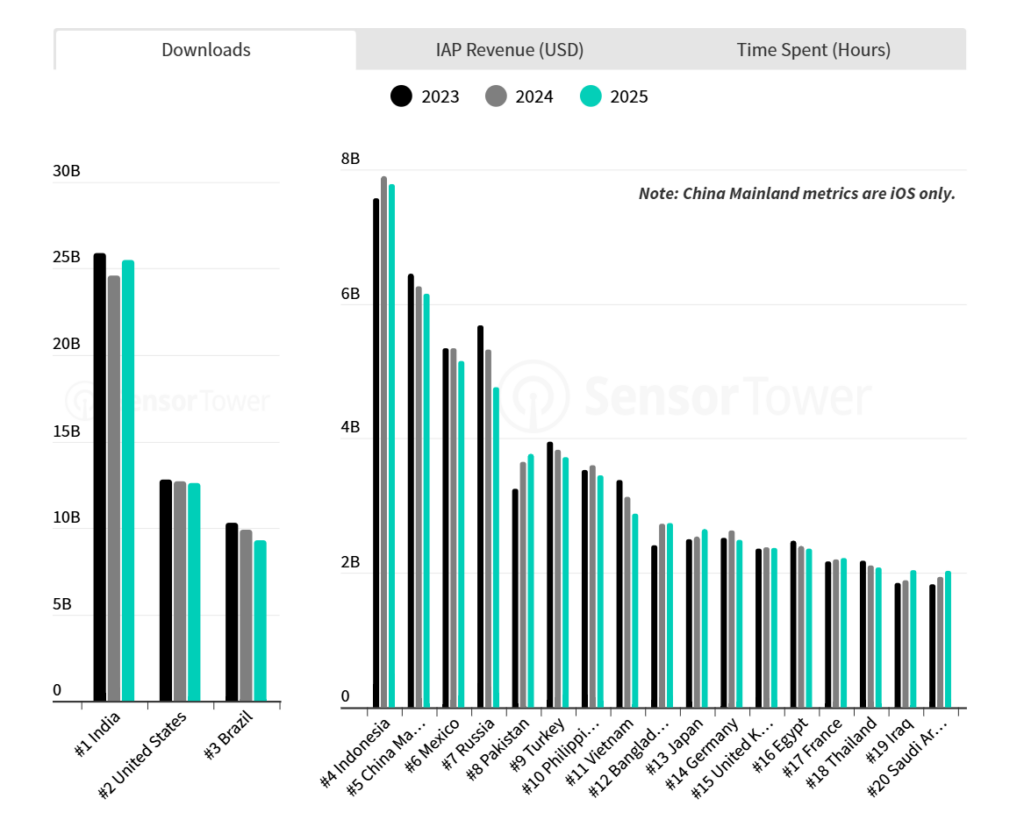
For years, the standard App Store Optimization playbook involved fighting aggressively for a top-three position on high-volume English keywords in the United States. As the cost per install continues to rise, that strategy yields diminishing returns for independent studios and mid-sized publishers. Global app downloads are projected to reach 324 billion by 2026, an 8.4% year-over-year growth. However, this growth is heavily concentrated in emerging economies, not North America or Western Europe.
Source
Many product managers assume a high volume of installs in Tier 3 countries equates strictly to low retention and poor monetization. But as smartphone adoption deepens globally and data plans become affordable, regions across Southeast Asia, Latin America, and Sub-Saharan Africa are exhibiting massive monthly active user growth alongside pure install volume. Ignoring these regions leaves high-quality organic traffic on the table.
Vietnam: The iOS Engagement Anomaly
Vietnam currently represents one of the most aggressive growth anomalies in the iOS ecosystem. While many practitioners focus strictly on standard European locales, the Vietnamese storefront is absorbing massive user influxes. Recent tracking shows a 15.50% download growth on the App Store in this region, coupled with a staggering 405.87% growth in monthly active users. This indicates a maturing user base that actively consumes localized content.
When approaching Vietnam, standard automated translation is insufficient. Search behavior here frequently blends native terminology with English technical terms, specifically within the gaming, social, and e-commerce categories. If you are submitting metadata in App Store Connect, your keyword research must reflect this hybrid search behavior. Because the market is still maturing, keyword competition is remarkably low. An application can secure a top-five position for a generic keyword with a fraction of the daily downloads required in Tier 1 markets.
Brazil: High Volume Meets High Engagement
Brazil is frequently categorized purely as a volume market, a place to buy cheap impressions that rarely convert. Current platform data proves this perspective wrong. Brazil recorded 10.0 billion downloads on Google Play with a simultaneous 36.51% increase in monthly active users. App Store performance is even more striking, where Brazilian monthly active users surged by 209.74%. Brazilian users are retaining apps and engaging daily.
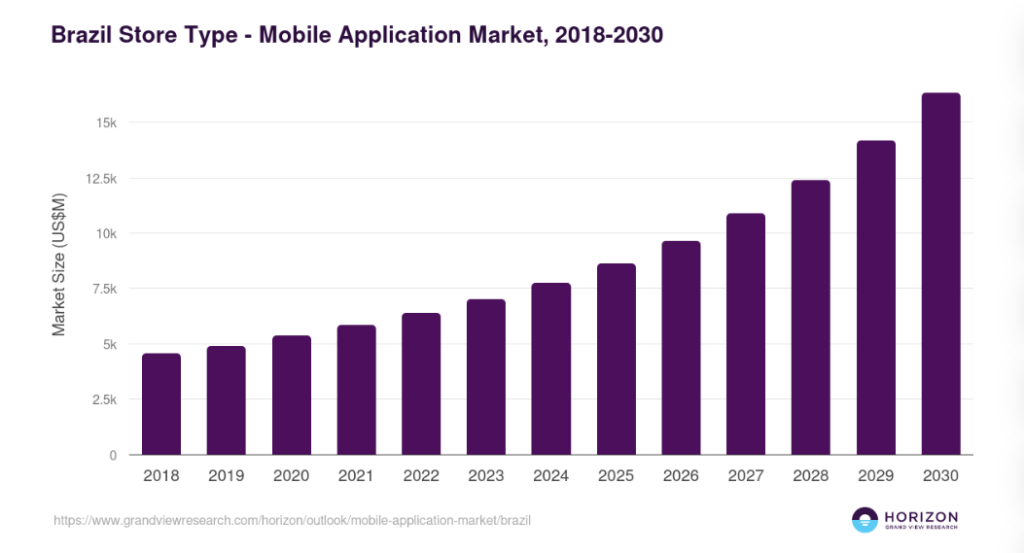
Portuguese (Brazil) localization requires a highly cultural approach. On Google Play, updating your feature graphic and screenshots to reflect local nuances drastically improves the conversion rate. Furthermore, the algorithm heavily weights user reviews in this region. Incorporating high-frequency keywords from user feedback back into your long description helps build a self-sustaining organic growth loop. To see how to execute this, read our case study on successful app promotion in Brazil.
Nigeria: Infrastructure-Driven Expansion
Sub-Saharan Africa is rarely prioritized in early-stage roadmaps, yet Nigeria is posting a 320% year-over-year download growth. This expansion is fueled by falling infrastructure costs; the price of 1GB of mobile data has plummeted to $0.50, removing a massive barrier to app usage. The market shows exceptional demand in the fintech and betting categories.
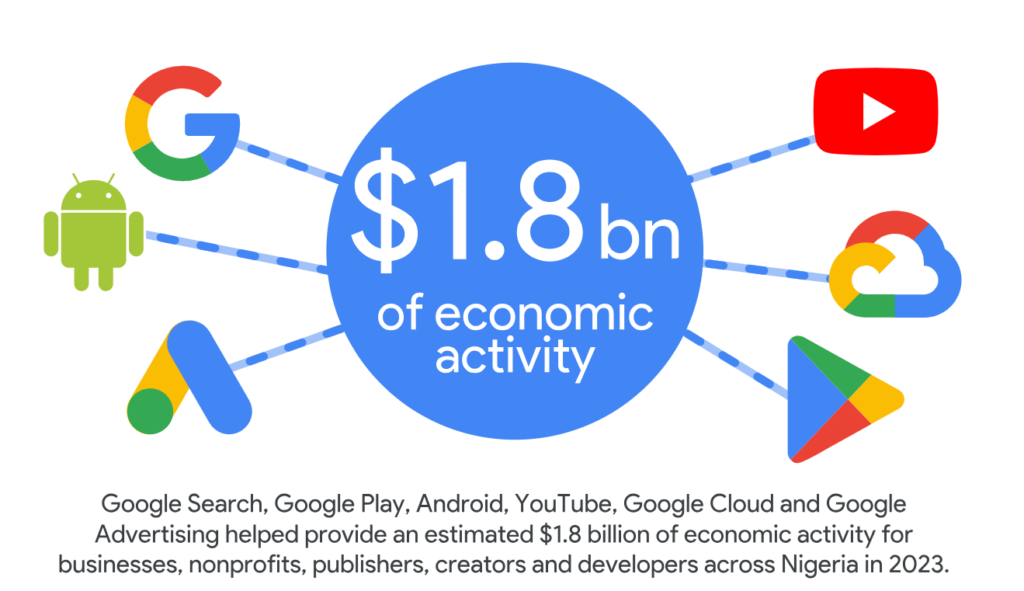
For Android developers, localization here requires attention to technical phrasing. Users actively search for keywords related to low data usage, offline capabilities, and battery efficiency. Because English is the primary language, many teams assume their standard US metadata will suffice. Creating a custom store listing for the Nigerian market that highlights low-bandwidth functionality establishes immediate trust and capitalizes on incredibly low baseline CPIs.
Indonesia: The Mobile-First Giant
Indonesia operates at a massive scale, recording 7.4 billion downloads on Google Play. It is a fiercely mobile-first economy skewed heavily toward gaming and tool applications. The challenge here is retention. Massive downloads do not always translate to sustained active users without strict attention to the onboarding experience.
Bahasa Indonesia is relatively straightforward for metadata localization, but visual assets require deep optimization. Indonesian users rely heavily on screenshots and preview videos to understand an app before installing. If your visuals do not immediately communicate value, users will bounce. Teams must focus on high-conversion visual testing within the Indonesian Google Play Console before accelerating keyword ranks.
Mexico: The Latin American Bridge
Mexico is the fastest-growing Google Play market within the global top ten, boasting a 14.10% download growth and 4.5 billion total downloads. Despite this volume, many publishers simply apply their Spanish (Spain) metadata to the Mexican storefront, creating a severe disconnect in user intent and algorithmic indexing.
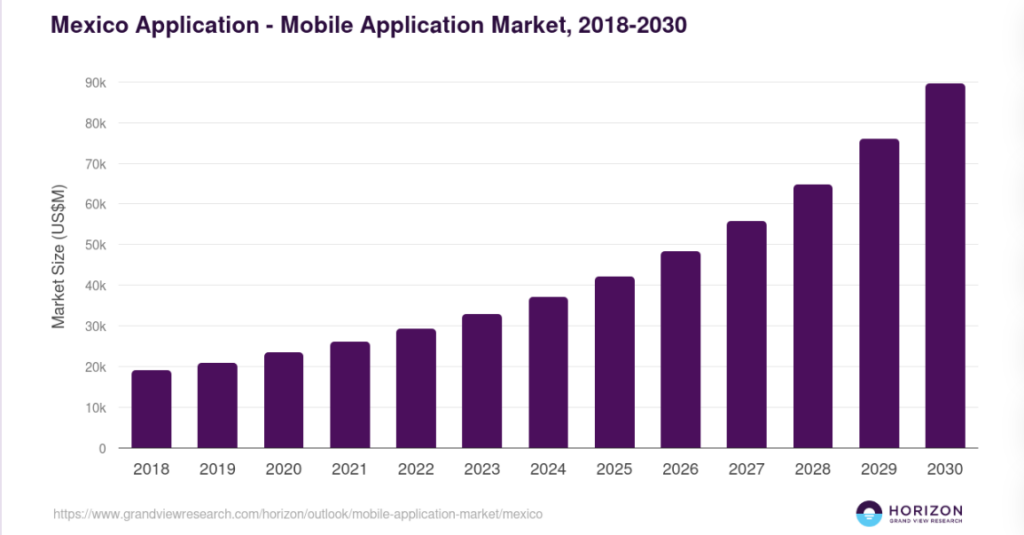
Mexican Spanish features distinct vocabulary, particularly in consumer technology and entertainment. Competition is intensifying, but the barrier to entry for top keyword ranks remains manageable. By conducting dedicated keyword research using local autocomplete suggestions, growth marketers can capture significant organic traffic that competitors using generic translations overlook.
Solving the Cold Start Problem
Knowing which regions to target is only the first step. You can translate your title and description perfectly, but when an app enters a new regional market, it has zero historical data. Algorithms act defensively, burying new apps below established competitors, a hurdle known as the cold start problem.
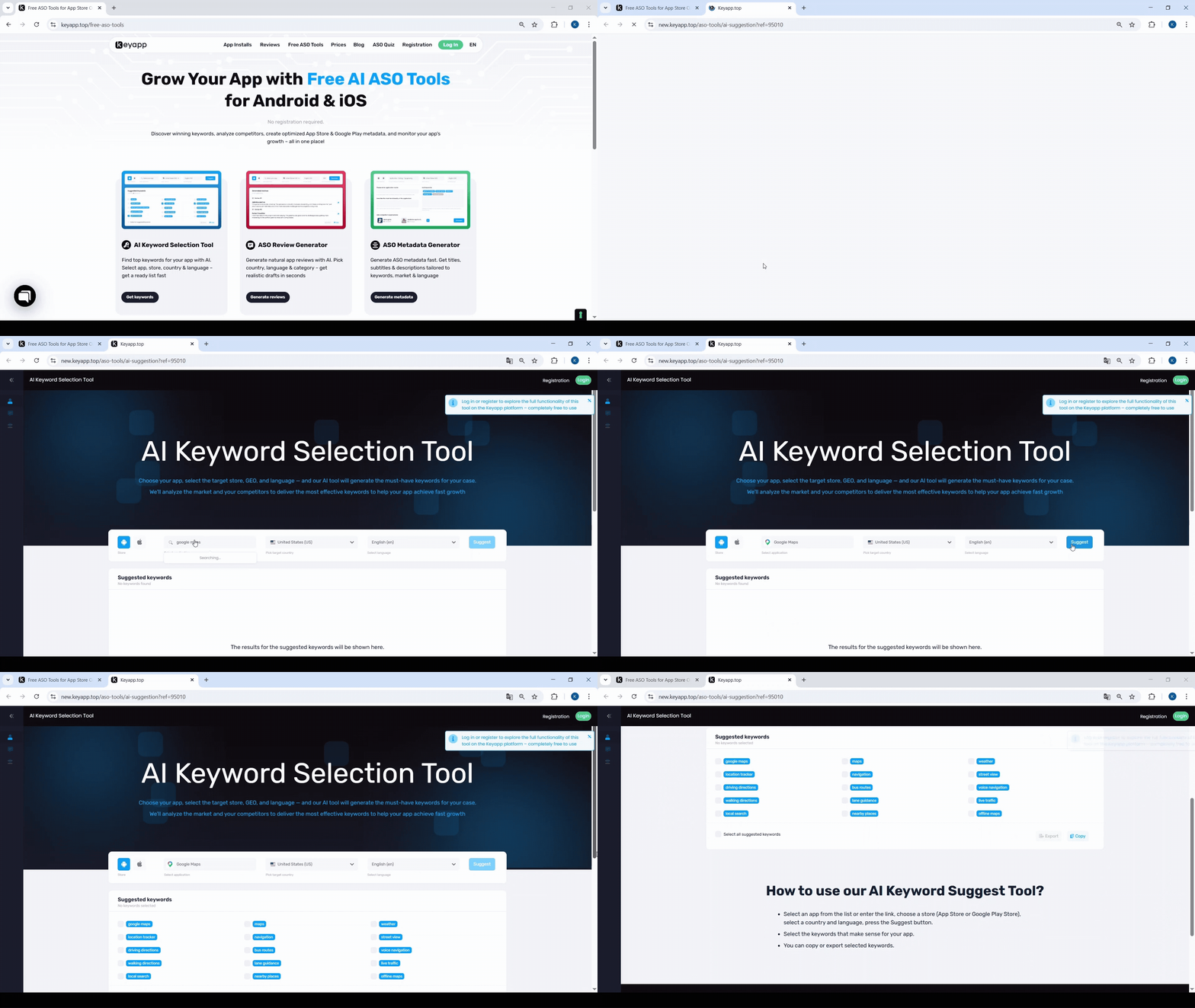
To break out of this suppression, you need to execute two steps: localized metadata creation and algorithmic validation.
- To help with the first step, Keyapp offers a suite of free AI-powered ASO tools, including an AI Keyword Selection Tool, ASO Review Generator and ASO Metadata Generator. These tools support both the App Store and Google Play, allowing you to rapidly find localized keywords and draft optimized metadata for your target markets without spending hours on manual research.You can see how these AI free ASO tools work in more detail in our video.
- Once your listing is localized, you must prove to the algorithm that your app is relevant to those new keywords. This is where strategic promotion comes in. Keyapp provides the infrastructure to run keyword install campaigns across more than 200 regions globally.
By deploying a controlled volume of keyword installs in your target country, whether that is Brazil, Nigeria, or Vietnam, you send a direct relevancy signal to the store algorithm. Because the baseline competition in Tier 2 and Tier 3 markets is significantly lower, you need a much smaller investment in keyword installs to reach the top three positions compared to the US or UK markets. Once that top rank is secured, it translates directly into a self-sustaining stream of free organic traffic.
Conclusion
Relying exclusively on Tier 1 markets for app growth is an increasingly expensive and mathematically limiting strategy. The most aggressive expansion in monthly active users and sheer download volume is happening in emerging economies. Markets like Vietnam, Nigeria, Brazil, Mexico, and Indonesia offer highly lucrative environments with weak keyword competition. By localizing intelligently and running keyword installs campaigns, you can build sustainable, high-volume acquisition pipelines.
If you want to test these markets but are not sure where to begin, reach out to the Keyapp Support Team. We can help you identify the best opportunities and map out a promotion plan tailored to your specific app and target regions.