

April 2026 – Google Play’s Enforcement Sweep, New App Store Locales, and Subscription Shifts
- Overview:
- App Store Metadata Opportunities in New Locales
- Subscription Model Shifts and Monetization on iOS
- Google Play Adds Review Search Function
- Google Play’s Push for Large-Screen Optimization
- Platform Bugs, Indexing, and Ad Turbulence
- Final Thoughts
April 2026 forced ASO practitioners to adapt quickly to strict platform updates and new monetization rules. Google Play initiated a massive sweep of policy enforcements while fundamentally changing how users interact with app reviews. Simultaneously, Apple opened fresh metadata real estate in the Indian market and restructured its subscription options, offering teams new ways to optimize conversions. Here is a breakdown of the structural shifts that defined the month and how to adjust your growth strategy.
App Store Metadata Opportunities in New Locales
Apple announced on March 31 that App Store Connect now supports localized metadata for 11 new languages, increasing the total supported languages to 50. The newly added languages include Bangla, Gujarati, Kannada, Malayalam, Marathi, Odia, Punjabi, Slovenian, Tamil, Telugu, and Urdu. Ten of these languages are specifically targeted at the Indian market. Apple explicitly highlighted “especially in India” in their announcement, a phrasing that stands out given the typically clinical nature of developer changelogs.
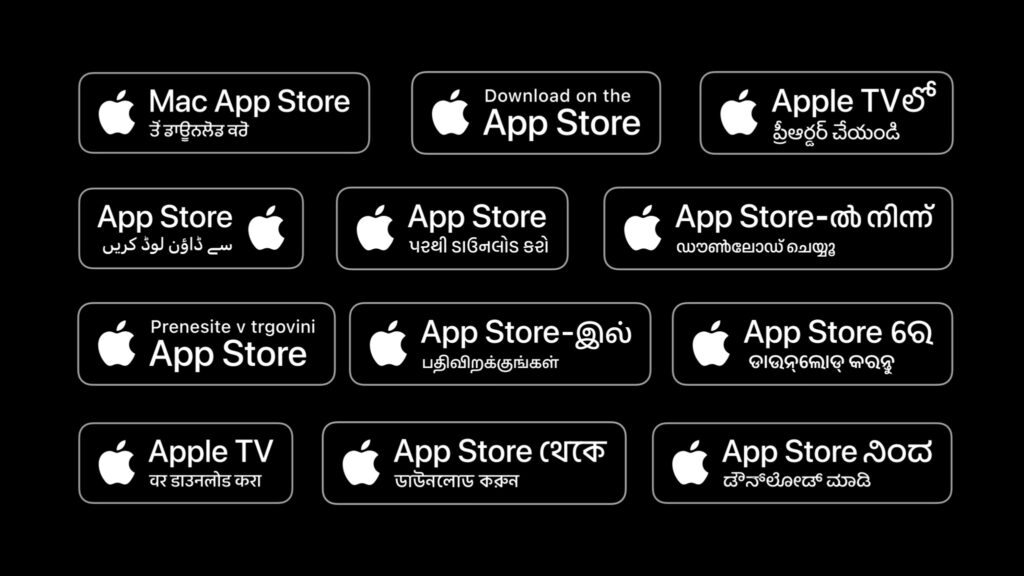
For ASO practitioners, this expansion creates a highly lucrative first-mover window. Indian-language keyword spaces on the App Store remain largely uncontested at this early stage. Each new locale provides an additional 160 characters of indexable metadata, opening massive opportunities for broad keyword coverage. Additionally, Urdu functions as a cross-locale for Pakistan, extending the geographical reach of these metadata updates even further.
Teams already operating successfully in India on Google Play should prioritize migrating and adapting their metadata strategies to iOS immediately. However, simple translation is insufficient. The search behavior in these specific linguistic markets often blends English terminology with local dialects. Thorough keyword research using localized autocomplete suggestions and competitive analysis is required. Early adopters who populate these metadata fields with high-relevance terms will likely establish entrenched ranking positions before the broader market reacts, securing lower-cost organic installs in a rapidly growing mobile economy.
Subscription Model Shifts and Monetization on iOS
In a move that significantly impacts app monetization strategies, Apple introduced cheaper options and new commitment models for App Store subscriptions. This update allows developers to offer more flexible pricing tiers and commitment lengths, fundamentally changing how growth marketers construct their paywalls and design user onboarding flows.
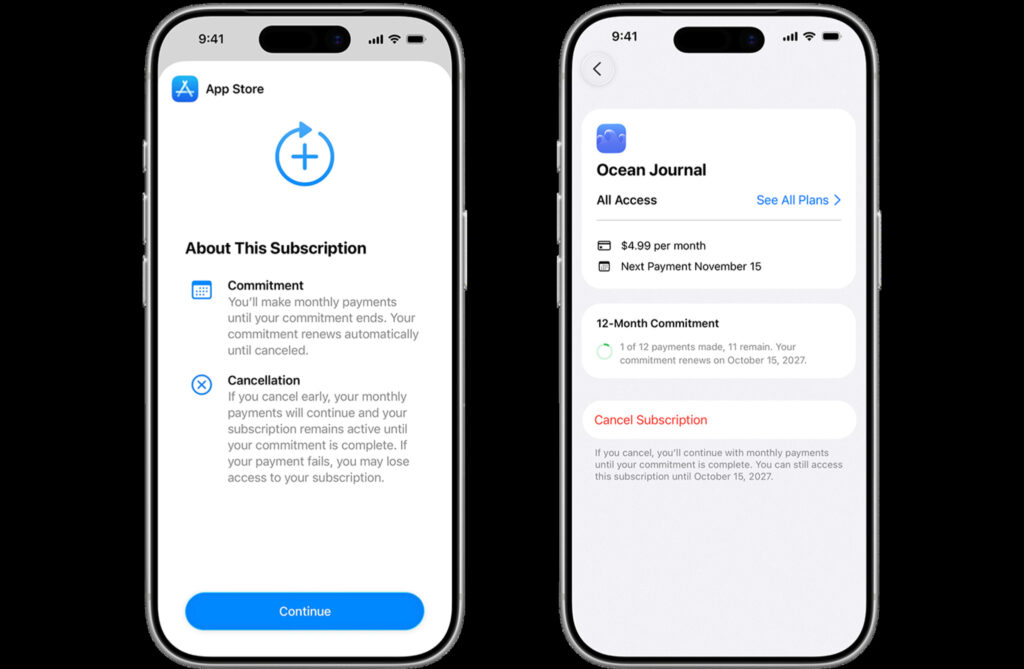
Historically, rigid subscription models forced users into binary decisions, often leading to high abandonment rates at the point of purchase. The introduction of flexible commitments allows developers to test lower-barrier entry points. For instance, offering a heavily discounted initial commitment period can capture price-sensitive users who might otherwise abandon the app. This requires a sophisticated approach to lifetime value modeling. We must now calculate whether the volume of new conversions generated by a cheaper commitment option offsets the potential loss in immediate upfront revenue compared to traditional annual plans.
This change also necessitates a complete review of promotional text and paywall graphics. Value propositions must be redesigned to clearly communicate the benefits of these new commitment structures. Win-back campaigns targeting churned users can also be revitalized by offering these newly available, lower-tier subscription options. Product managers and ASO specialists must work in tandem to run A/B tests on the App Store product page, specifically testing screenshots that highlight flexible pricing to measure the impact on the initial install conversion rate.
Google Play Adds Review Search Function
Google Play significantly altered user interaction mechanics by adding a search function directly within the app review section. Users can now actively search through historical reviews using specific keywords to find exact answers about an app’s performance, bugs, or feature limitations before deciding to install.
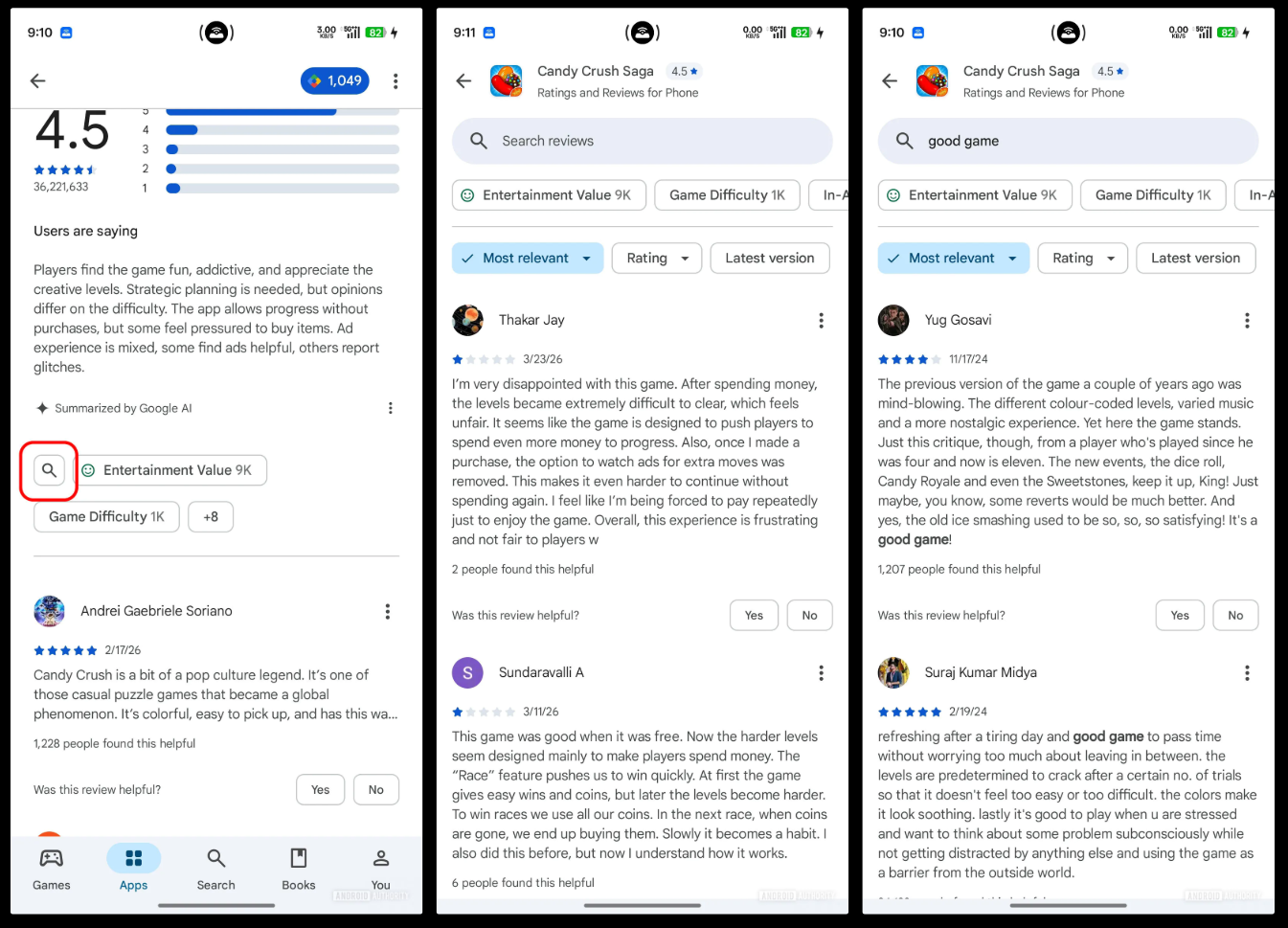
This feature transforms reviews from a passive aggregate rating into an active, searchable database of user sentiment. If a user searches for “crash,” “refund,” or “customer service,” they will instantly see every review containing those terms. This direct visibility makes reputation management a hyper-critical component of conversion rate optimization. An app might have a high overall rating, but if the search results for common keywords reveal a pattern of unresolved issues, the conversion rate will inevitably drop.
We must adjust our review management workflows accordingly. Automated tagging systems should be implemented to track the frequency of specific keywords within incoming reviews. More importantly, developer responses are now visible within these targeted searches. A professional, solution-oriented response to a negative review containing a high-frequency search term acts as a crucial defense mechanism. It demonstrates active development and customer care to prospective users who are actively hunting for flaws. Keyword extraction from reviews should also inform our product roadmaps and our ASO metadata, ensuring we are directly addressing the precise terminology users employ when describing the application.
Google Play’s Push for Large-Screen Optimization
Reflecting the growing market share of tablets and foldable devices, Google Play introduced a specific badge for large-screen optimized apps. This visual indicator signals to users that an application is fundamentally designed to utilize expanded screen real estate, rather than simply stretching a standard mobile interface.
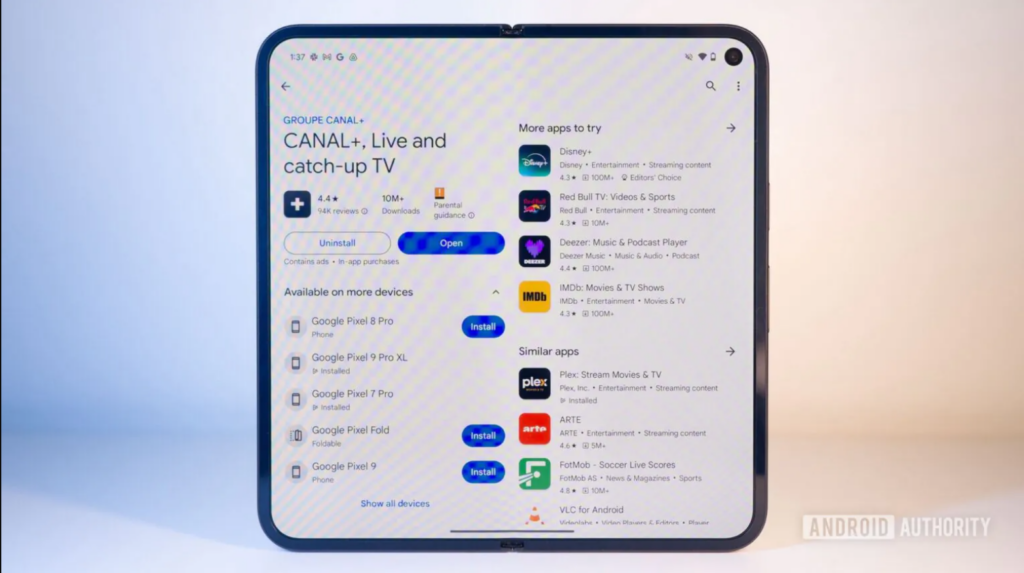
This introduces a new variable into the conversion rate equation for Android developers. Devices with larger screens typically boast higher user engagement and monetization metrics. Users on these premium devices are highly selective. The presence of the large-screen optimization badge serves as a trust signal, directly influencing the decision to install. Apps lacking this badge will likely experience a gradual decline in conversion rates among tablet and foldable users, as these cohorts gravitate toward software that promises a native, high-quality experience on their specific hardware.
Securing this badge requires coordination between development and marketing. The application must meet Google’s technical criteria for large-screen layouts, but the marketing assets must also reflect this capability. Store listings need to be updated with high-resolution, landscape-oriented screenshots and promotional videos that explicitly demonstrate the UI behaving fluidly on a tablet or foldable screen. We cannot rely on standard mobile screenshots to convert users on larger devices; the visual pitch must match the hardware environment.
Platform Bugs, Indexing, and Ad Turbulence
April saw technical glitches across both platforms, directly affecting performance tracking and visibility. On iOS, metadata indexing experienced severe delays, icon A/B testing temporarily broke, and a visual bug rendered some icons square. These issues compounded the organic ranking turbulence caused by Apple’s global expansion of App Store search ads, which displaced many top-ranking organic results and forced teams to heavily reassess their blended visibility and defensive bidding strategies.
Meanwhile, Google Play dealt with a display glitch that artificially inflated install counts. More importantly, Google executed a massive enforcement sweep, removing over 5,000 apps in late April – primarily hitting Casual Games, Entertainment, and Shopping. Interestingly, this sweep created a rare short window of algorithm stability with zero keyword ranking losses on Google Play US, offering compliant apps a low-friction environment for metadata updates.
Final Thoughts
April’s platform updates require immediate operational adjustments from marketing teams. The opening of new App Store locales offers a clear first-mover advantage for those ready to localize metadata accurately. On Google Play, the new review search functionality and large-screen badges mandate a tighter alignment between product development and reputation management. Adapting to Apple’s flexible subscription models will also be essential for capturing price-sensitive users. Success in the coming months depends on quickly testing these new features while maintaining strict compliance to survive ongoing platform enforcement sweeps.
Let’s adapt your app to the latest store algorithms and scale your organic traffic. The Keyapp.top team will audit your current strategy and build a custom promotion plan for Google Play and the App Store.