
February 2026 — Search algorithm updates, new technical requirements for visibility, and historic shifts in mobile app revenue.
- Overview:
- Non-Gaming Apps Surpass Games in Revenue for the First Time
- Google Play Ties Battery Optimization to Organic Visibility
- Apple Redesigns App Store Search (Again)
- Category Rankings Promotion as a New Growth Channel
- Conclusion
February brought several key updates that directly affect how apps acquire new users and how developers compete in search results. From Google’s strict new technical performance requirements to navigation changes in the App Store, the platforms continue to adapt their ranking systems. At the same time, the market crossed a major milestone: non-gaming apps surpassed the gaming industry in revenue for the first time. In this review, we break down these changes and explain what steps ASO specialists should take to maintain and scale their organic traffic.
Non-Gaming Apps Surpass Games in Revenue for the First Time
For years, mobile games generated the vast majority of app store revenue, driving the main trends in user acquisition. However, recent data points to a fundamental shift in user behavior. According to Sensor Tower’s State of Mobile 2026 report, consumers spent more money on non-gaming apps than on games in 2025 for the first time. Overall, users spent 5.3 trillion hours in apps.
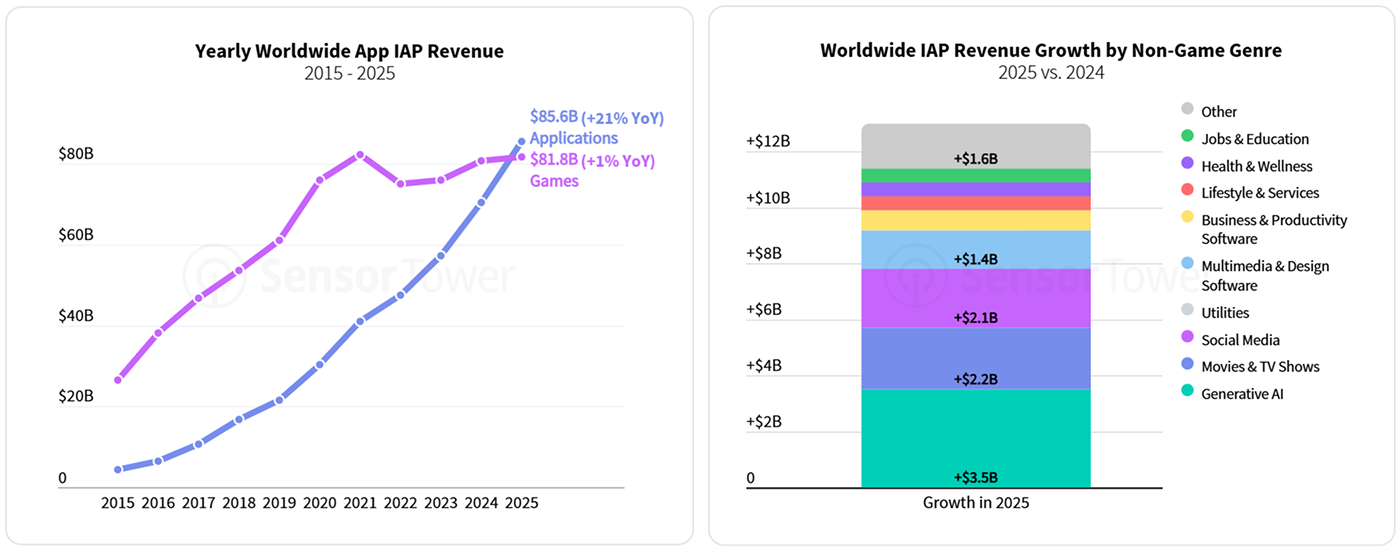
This historic shift is driven by strong revenue growth in categories like generative AI, social media, video streaming, and productivity. For mobile marketers, this has highly practical implications. Monetization models relying on subscriptions, paywalls, and in-app purchases are no longer exclusive to game developers. They have become the dominant monetization logic across the entire mobile market.
From an ASO perspective, the growing revenue of non-gaming apps means store algorithms are increasingly factoring financial metrics into their recommendations. Organic visibility in the Browse (App Store) and Explore (Google Play) tabs often correlates with an app’s placement in “Top-Selling” charts. If your app has strong unit economics and a high conversion rate to paid subscriptions, the platforms recognize its commercial value and rank it higher than competitors. Consequently, marketing strategies need to focus on optimizing the store listing not just for installs, but for subsequent purchases.
Google Play Ties Battery Optimization to Organic Visibility
Another critical update this month involves technical requirements for Android apps. Google Play continues to increase the impact of app quality metrics (Android Vitals) on its search and recommendation algorithms. Starting March 1, 2026, apps that fail to meet Google’s strict battery optimization standards risk losing their rankings.
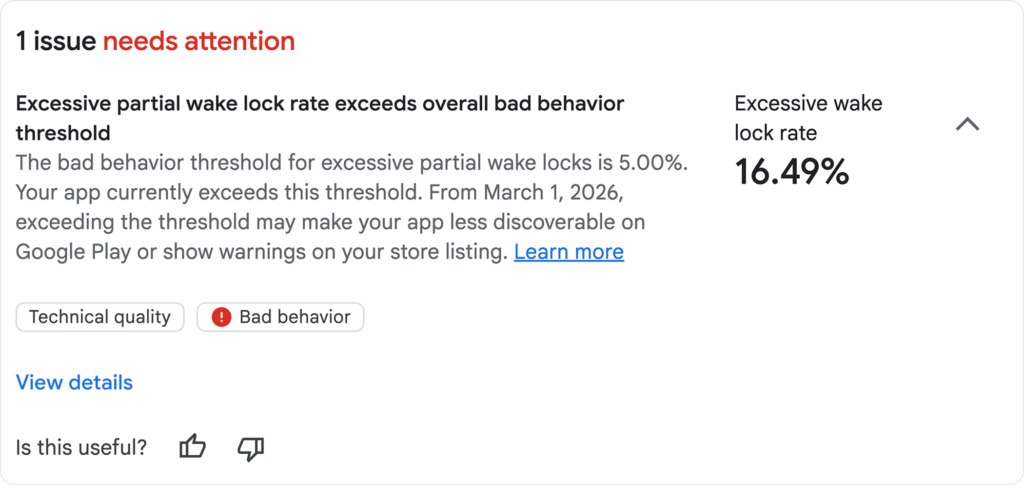
This penalty will affect placements across the most important traffic-driving surfaces, including personalized recommendations and curated editorial lists. Previously, issues with background power consumption or excessive wake locks mostly impacted user uninstall rates. Now, an app’s technical performance directly and automatically affects its organic visibility. Technical metrics are no longer just an engineering problem.
For ASO teams, this requires close coordination with engineering. Marketers should regularly check Android Vitals in the Google Play Console, comparing their app’s battery consumption against category medians. If your metrics fall below the market average, the Google Play algorithm will assume your app delivers a poor user experience and will lower its rankings. Verifying compliance with these standards before the March deadline should be a top priority.
Apple Redesigns App Store Search (Again)
App store user interfaces are evolving, and any design changes directly impact search behavior. In the iOS 26.4 beta, Apple redesigned App Store search once again. The search bar has returned to its familiar spot at the top of the screen, and the search tab has been reintegrated into the bottom navigation bar, replacing the standalone floating button.
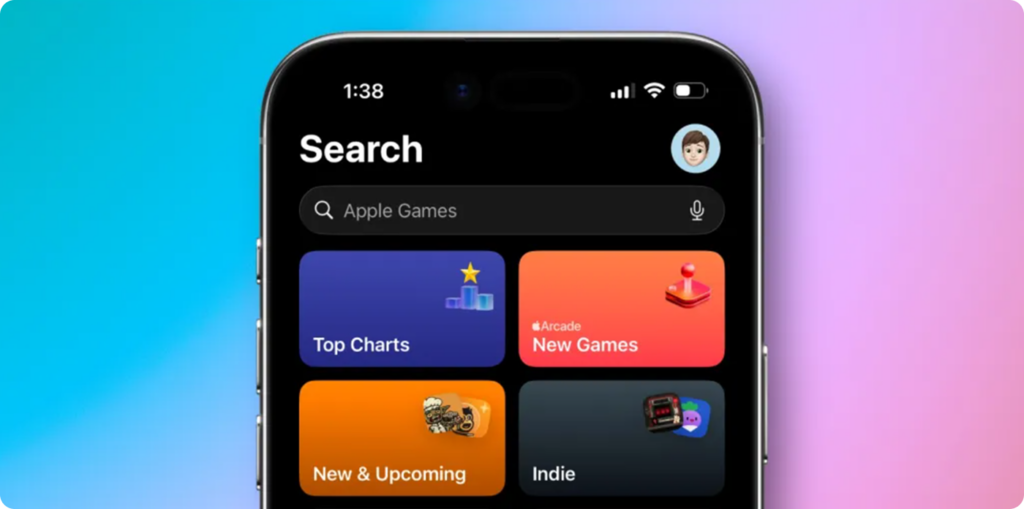
While this might look like a purely cosmetic UX update, it changes how users interact with search. Placing the search bar in a traditional, highly accessible location typically reduces cognitive load and can drive an overall increase in direct search queries. At the same time, it might shift user attention away from auto-suggestions and recommended blocks back toward deliberate keyword inputs.
For ASO specialists, this change is a signal to monitor analytics closely. Keep a close eye on search Click-Through Rates (CTR) once this OS update rolls out globally. If you notice a shift in traffic volumes or a drop in conversion for your core keywords, you may need to adapt your text metadata or reorder your screenshots to better fit the updated visual experience.
Category Rankings Promotion as a New Growth Channel
Beyond standard keyword search, a significant portion of traffic comes from users browsing top charts. People often discover new apps simply by scrolling through the top lists in a specific category. To address this, Keyapp.top recently launched a new service for Google Play: Category Rankings Promotion. You can learn more about how it works in our dedicated article.
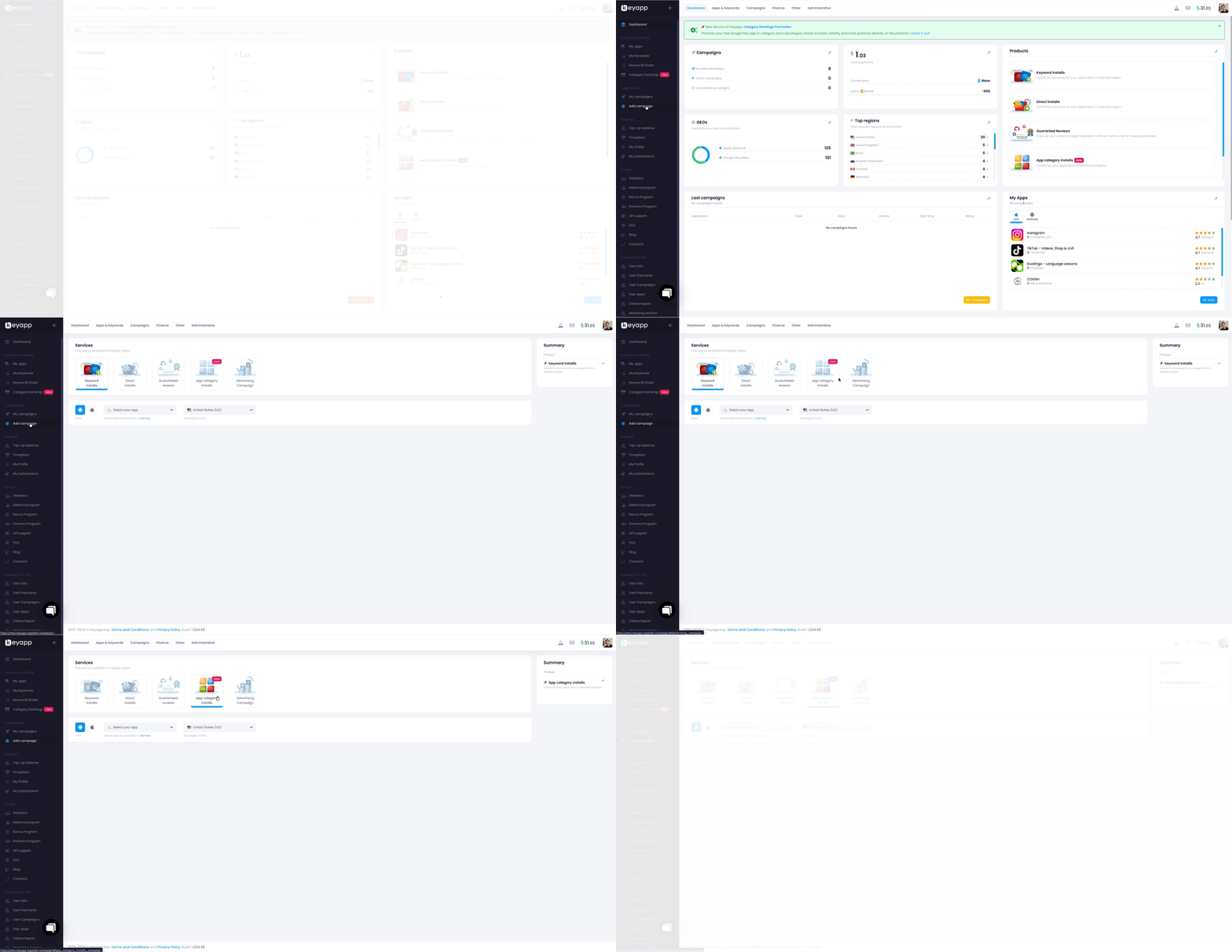
This tool is specifically designed to improve an app’s position within targeted category charts. It opens up a new avenue for scaling your marketing efforts. You gain the ability to directly influence your app’s visibility inside the lists that users actively browse every day.
For apps with a strong category fit, this is a highly practical way to expand audience reach. It is important to understand the difference in user intent: someone searching for a specific keyword (like “pdf scanner”) has a clearly defined need. In contrast, a user browsing the top “Productivity” charts is open to new suggestions and exhibits a more exploratory mindset. Category promotion and keyword campaigns target different stages of the funnel, so running them in parallel creates the strongest synergy for overall user base growth.
Conclusion
All the updates this month point to a consistent trend: both app stores are actively raising the bar for maintaining visibility. Google is firmly tying organic placement to technical performance metrics. Apple is adjusting user search journeys, requiring marketers to stay flexible with their analytics. At the same time, non-gaming app monetization is maturing rapidly, meaning growth strategies across all categories must become more deliberate and comprehensive.
Your action plan for the coming weeks should be highly focused. First, audit your app’s technical compliance in the Play Store ahead of March 1, paying special attention to battery consumption and stability metrics. Next, set up monitoring for your App Store search CTR as the updated UI rolls out. Finally, if you have previously relied solely on keyword optimization, now is the time to understand how category promotion differs from traditional campaigns before ruling out this potentially powerful tool.
Need expert guidance for your app’s growth? The Keyapp.top support team is here to refine your strategy and help you stay ahead of the latest algorithm shifts.
Reach out today to plan your winning promotion for 2026!