
How keyword promotion saved an ADHD organizer from the February drop.
- Overview:
- The Q1 Productivity Trap in Mobile Marketing
- How Keyword Promotion Changes the Equation
- Campaign Breakdown: Parallel Promotion and Timing
- Takeaways and Practical Insights
- Conclusion
Every January, productivity apps see a massive spike in downloads, only to face a critical drop in retention and organic rankings by late February. This case study shows how an app in the Planner & ADHD Organizer niche avoided this common trap. Instead of spending their entire budget on short-term January campaigns, the developers ran parallel keyword promotion across three specific terms throughout the entire quarter. This continuous traffic strategy allowed the app to secure a stable Top 5 position and acquire a high-quality, loyal user base.
The Q1 Productivity Trap in Mobile Marketing
The beginning of the year is the most turbulent period for the Productivity and Health & Lifestyle niches. Driven by New Year’s resolutions, millions of users mass-download habit trackers, planners, and calendars. According to data from the analytics platform Adjust, January downloads for these apps surge by 34% compared to the H1 average. Developers spend the lion’s share of their annual budgets trying to rank for highly competitive, broad keywords like “planner 2026”.
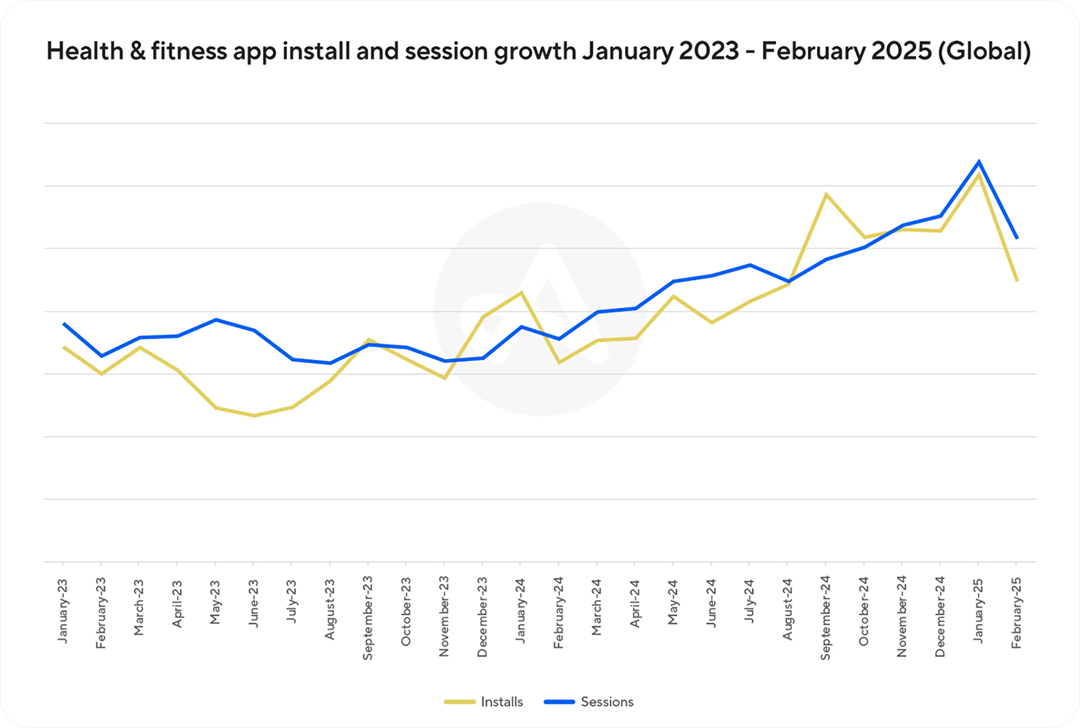
However, within just a few weeks, user behavior shifts drastically. Data shows that by Day 30, the retention rate in this category drops to 3-10%. This means that out of 100 users acquired in January, fewer than 10 remain active by February. People quickly lose motivation, stop opening the downloaded apps, or delete them altogether to free up device storage.
For mobile apps, this scenario leads to an algorithmic disaster. App Store and Google Play algorithms closely monitor engagement levels, session lengths, and uninstall rates. When the app stores detect a massive churn from the January user cohort, they downgrade the app’s ranking. As a result, the organic positions that were bought at a premium early in the year plummet. Mobile marketers refer to this cycle of artificial peaks and inevitable crashes as “The Q1 Productivity Trap.”
Standard ASO strategies often fail during this period because they focus entirely on capturing the maximum peak search volume. When developers completely exhaust their budgets in expensive January auctions, they have no resources left to sustain app visibility during the natural traffic decline in February and March.
How Keyword Promotion Changes the Equation
To build sustainable visibility that survives the seasonal churn, you need to signal consistent, long-term relevance to the algorithms. This is where properly configured keyword install campaigns, combined with reputation management, fundamentally change the growth dynamics.
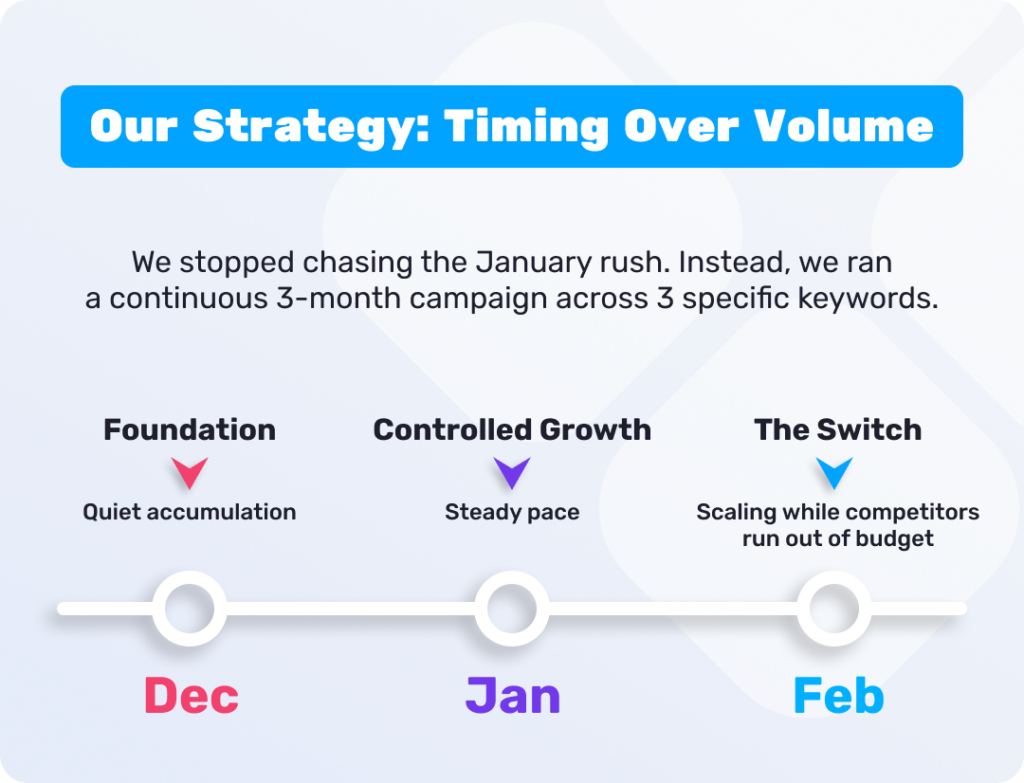
Instead of chasing short-lived January traffic, a professional campaign spreads the install volume across several months and runs them in parallel. A gradual, continuous increase in keyword rankings looks much more natural to store algorithms than a massive download spike that abruptly stops after a week or two.
Furthermore, simply reaching the top is not enough. Reputation management plays a critical role. As the app climbs the search results, it starts getting thousands of organic impressions. At this point, maintaining a rating of at least 4.5 stars and displaying high-quality reviews on the product page is vital. A high conversion rate from search signals to the algorithm that the app matches user intent, ultimately securing the new ranking and creating an algorithmic cycle of stable growth.
Campaign Breakdown: Parallel Promotion and Timing
Last winter, a developer with an app in the Planner & ADHD Organizer niche approached our platform. The goal was to efficiently capture seasonal US traffic on Google Play while avoiding the spring ranking drop.
We launched parallel promotion for three target keywords of varying search frequencies, running continuously for three months (from early December to late February). The only difference was the install intensity and the strategic role of each specific keyword within the overall pool.
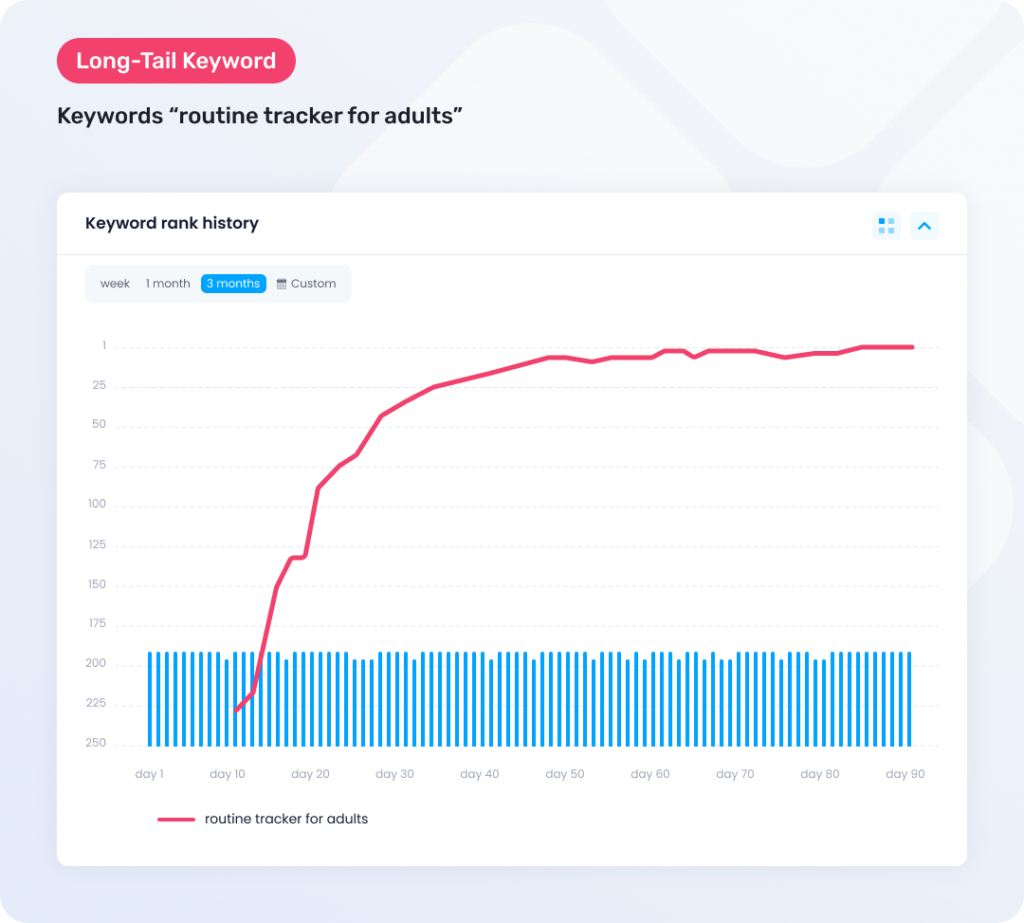
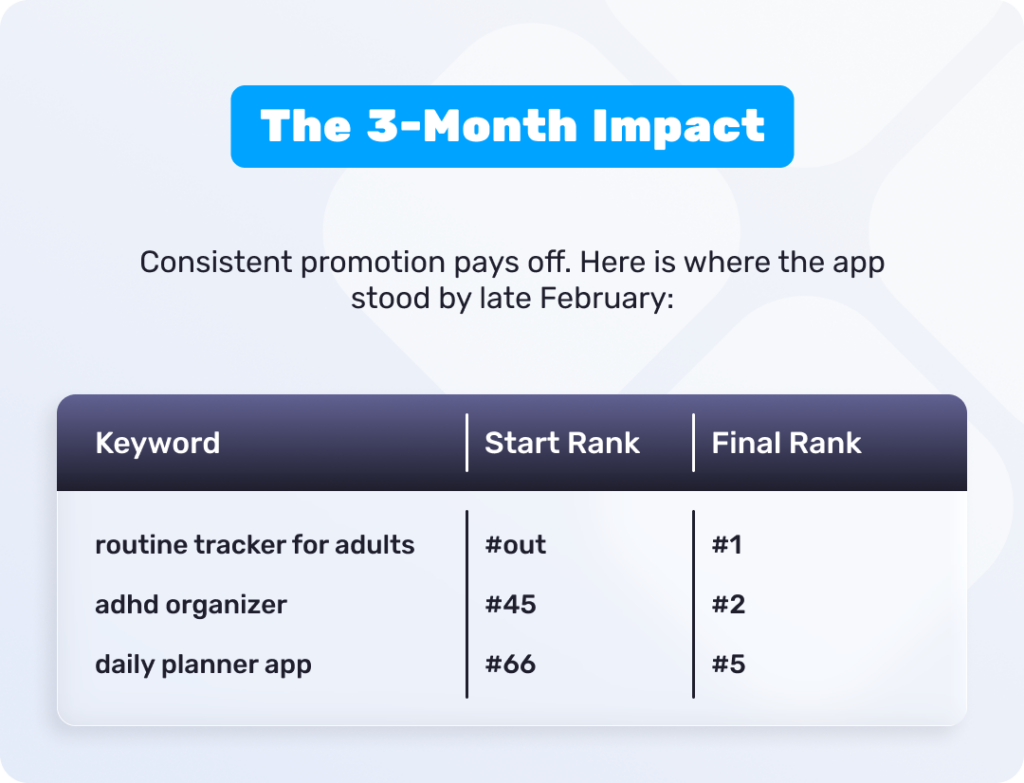
Long-Tail Keyword: “routine tracker for adults”
Promotion for this specific, high-intent query started from an “Out” position (completely unranked). Over the three months, we maintained a steady volume of 80-100 daily installs. This consistent activity allowed the app to smoothly enter the index and reach Rank #1 without any sudden spikes.
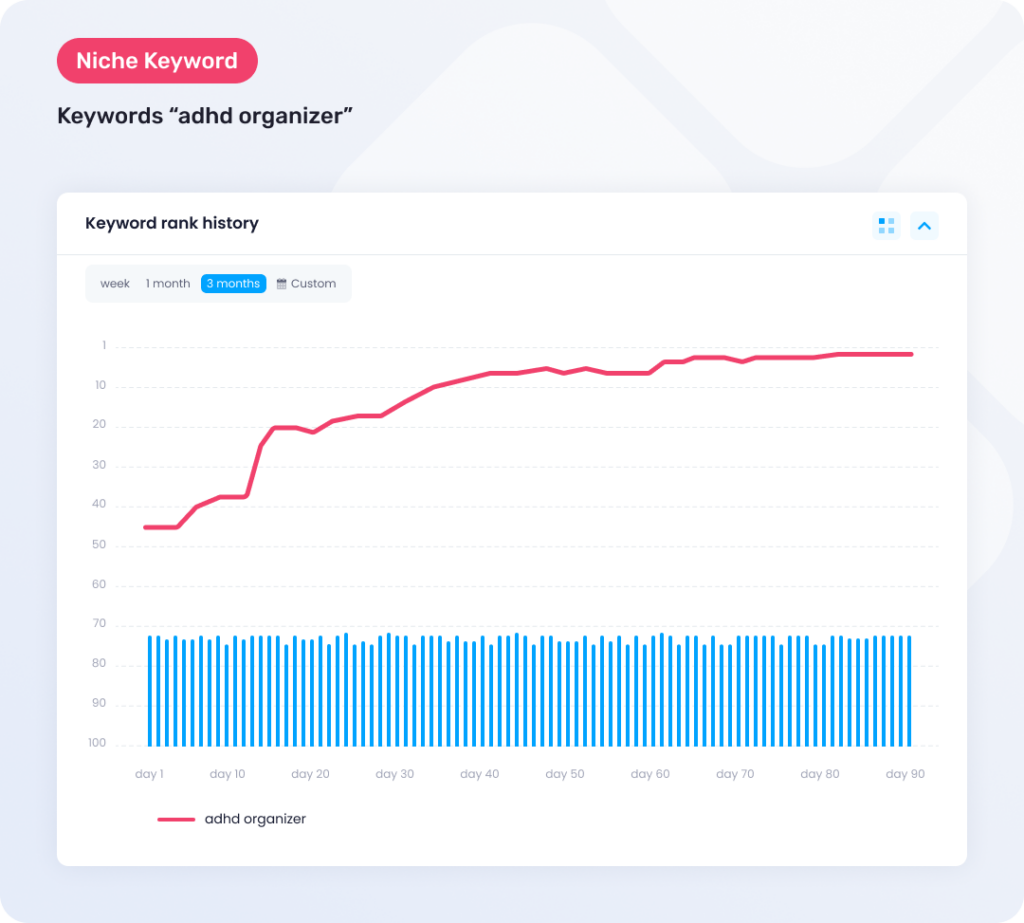
Niche Keyword: “adhd organizer”
The starting position for this target keyword was #45. We set up a parallel campaign with an intensity of about 130 daily installs. Thanks to continuous traffic throughout the quarter, the app confidently climbed to Rank #2, capturing the most relevant audience.
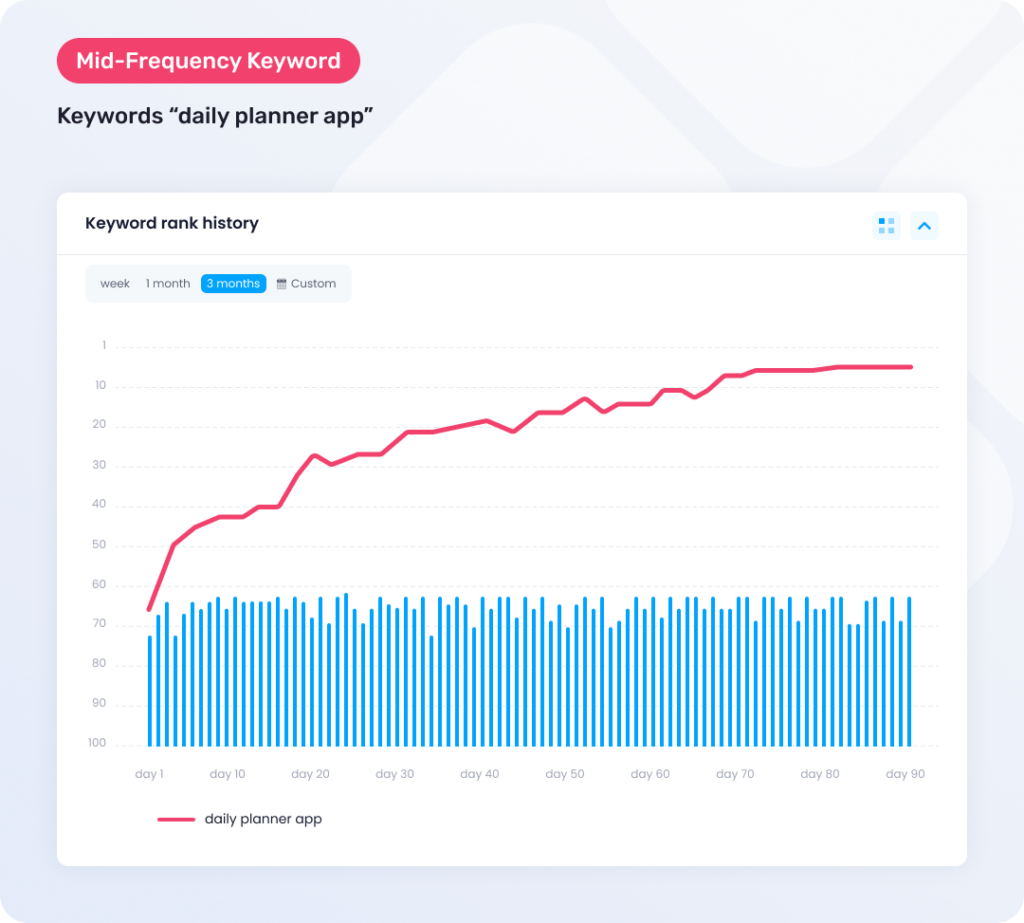
Mid-Frequency Keyword: “daily planner app”
This was the toughest and most competitive broad query in our strategy, starting at #66. We allocated the largest volume to it — between 150 and 200 daily installs, which was also maintained continuously for three months. As a result of this sustained effort, the app firmly secured the #5 position in search results.
Takeaways and Practical Insights
This three-month campaign clearly demonstrated that parallel and continuous promotion of target keywords outperforms the strategy of short-term bursts. Instead of competing for the most expensive January traffic, we achieved stable results.
- Better Retention. Users searching for specific tools (like an ADHD organizer) in February are people with a serious intent to change their habits, not just users yielding to the brief New Year hype. The retention rate for these cohorts is significantly higher than the market average.
- Cheaper Installs. Since we maintained stable campaigns even when most competitors had depleted their budgets in January, the user acquisition cost dropped substantially in February. This allowed us to optimize marketing spend.
- Lasting Ranks. Three months of consistent, steady incentivized traffic built a high level of trust with the search algorithms. The app’s rankings did not crash when spring arrived because the algorithmic weight was supported by the real activity of a high-quality target audience.
Conclusion
The Q1 Productivity Trap is not an inevitable stage in an app’s lifecycle; it is simply the result of misallocated budget and focus. If you want to build organic visibility that actually lasts after the season ends, reach out to the Keyapp.top support team. We will help you thoroughly analyze your current positions, select the right keywords, and develop a long-term promotion strategy for your mobile app.