January 2026 — Apple Ad Changes, Keyword Best Practices, and OpenAI’s Potential Store.
- Overview:
- Apple Search Ads is changing how placements work
- Testing the removal of the “Blue Background”
- Keyword Density is out; Semantic Coverage is in
- OpenAI is planning its own App Store
- Conclusion
January is usually a quiet month for mobile marketing. Most teams spend the time planning roadmaps and approving budgets for the year ahead. However, January 2026 was different. While developers were busy with strategy, the actual rules for acquiring users changed significantly.
We saw updates that affect both paid user acquisition and organic visibility. The line between how an ad looks and how an organic result looks is disappearing. At the same time, the way algorithms read your description is shifting away from simple keywords toward “intent.” Here is a detailed look at the four critical updates from January that you need to know to adapt your strategy.
1. Apple Search Ads is changing how placements work
The most practical update comes from Apple regarding Search Ads. Starting March 3, 2026, Apple will change how sponsored apps appear in search results. This rollout will begin in the UK and Japan before expanding to other regions.
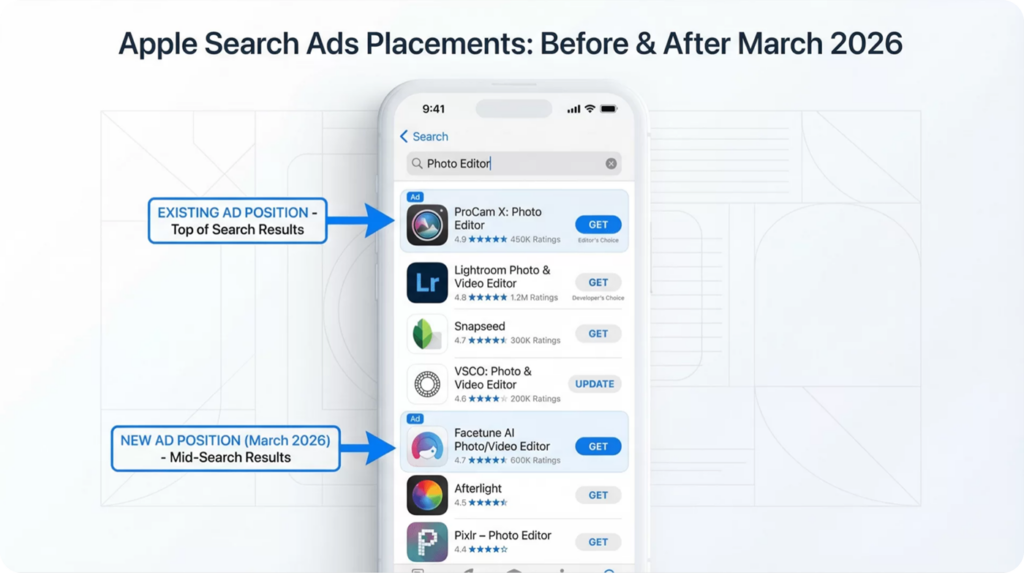
Previously, the “Search” tab had a predictable structure. The most valuable spot was the single ad placement at the very top of the list. Advertisers bid aggressively for this specific spot because it guaranteed visibility before the user saw any organic results. That structure is changing. Apple is introducing multiple sponsored placements that will be mixed directly into the organic search results feed, rather than just sitting at the top.
The most important takeaway for user acquisition managers is the loss of control. You can no longer bid for a specific position. You cannot pay a premium to ensure you are the first result. Instead, Apple’s algorithm will decide where your ad appears.
This shifts the focus from your bid price to your creative assets. In a system where the algorithm decides placement, your screenshots, app icon, and title must do the heavy lifting. If the algorithm does not see your app as relevant to the user, a high bid might not be enough to get you the visibility you want.
2. Testing the removal of the “Blue Background”
Alongside the structural changes to ad placements, there is a significant visual change currently being tested. Reports confirm that Apple is experimenting with removing the distinct blue background that has historically identified ads in the App Store.
For years, that blue tint was the primary visual cue telling users they were looking at a sponsored result. Removing it means ads will look nearly identical to organic search results. This is likely a move to combat “banner blindness,” where experienced users subconsciously skip over promoted content because it looks different. If this change goes global, we expect to see an increase in Click-Through Rates (CTR) for Search Ads. Users scanning the list will be less likely to distinguish between paid and organic results instantly.
However, a higher CTR comes with a risk. If users click your app thinking it is the organic top result, only to realize later it is an ad, their behavior might change. You might see lower conversion quality or different retention patterns compared to high-intent organic users. This makes it even more important to ensure your store assets accurately reflect what the user is looking for.
3. Keyword Density is out; Semantic Coverage is in
On the organic side, the algorithm is moving further away from simple text matching. In the past, a common ASO tactic was “keyword density” – repeating a target keyword 3 to 5 times in the description to prove relevance. In 2026, this tactic is outdated.
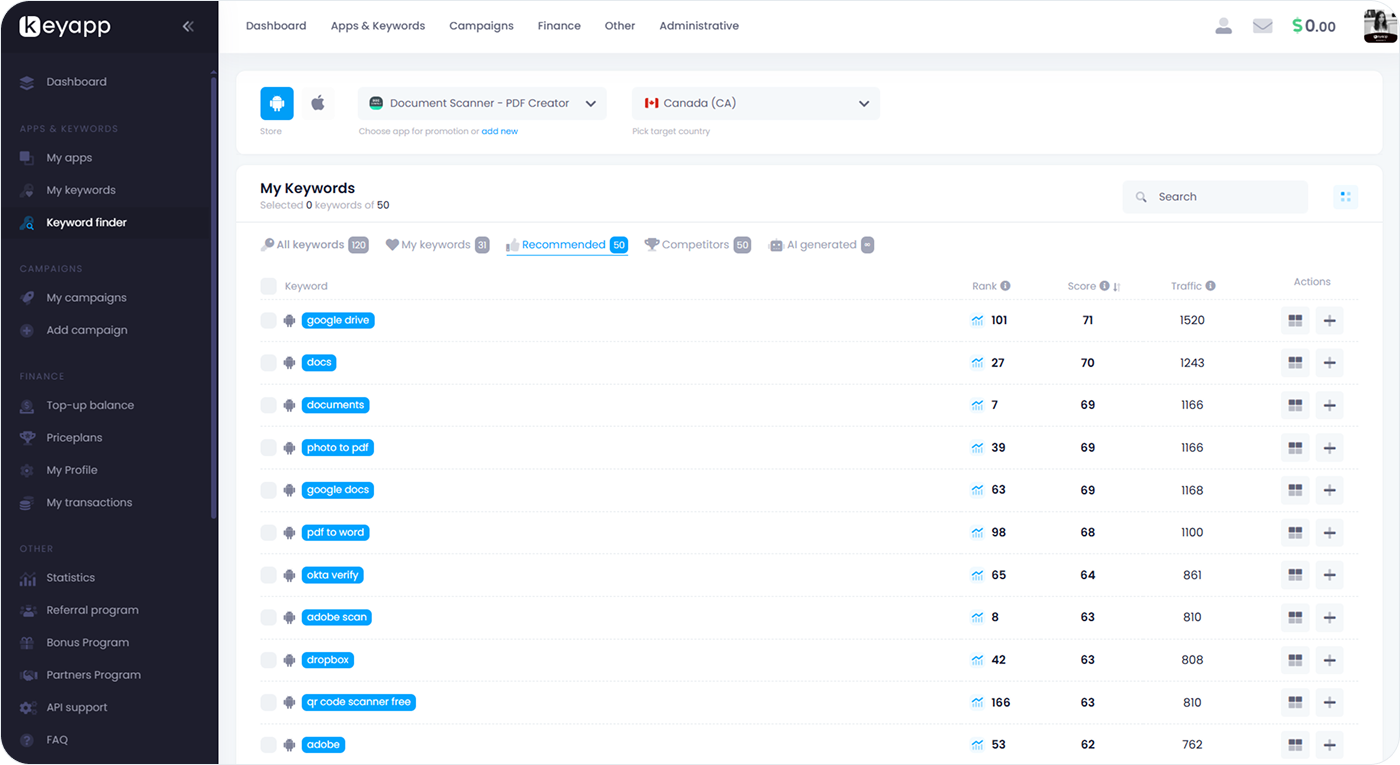
Source
Today, Google Play and the App Store rely on ‘semantic clusters’ rather than basic word counts. These stores now evaluate context to grasp the user’s true intent. Whether a person is looking to edit a photo or book a flight, the search engine identifies groups of related keywords that align with that objective to provide the most relevant results.
For ASO specialists, this means you should stop stuffing descriptions with the same keyword. Instead, focus on semantic coverage. Use synonyms, mention related features, and describe the specific problems your app solves. For example, if you have a fitness app, do not just repeat “workout” five times. You should build a cluster that includes terms like “weight loss,” “meal plans,” “HIIT,” and “personal trainer.” This tells the algorithm that your app provides a complete solution for the “fitness” intent.
Finding the right keywords is easier with AI-powered keyword suggestions in the Keyapp Keyword Finder tool. You can learn more about how it works in our dedicated article.
4. OpenAI is planning its own App Store
Finally, a major disruption might be coming to the app economy. Reports suggest that OpenAI is developing a dedicated store for consumer AI agents and software.
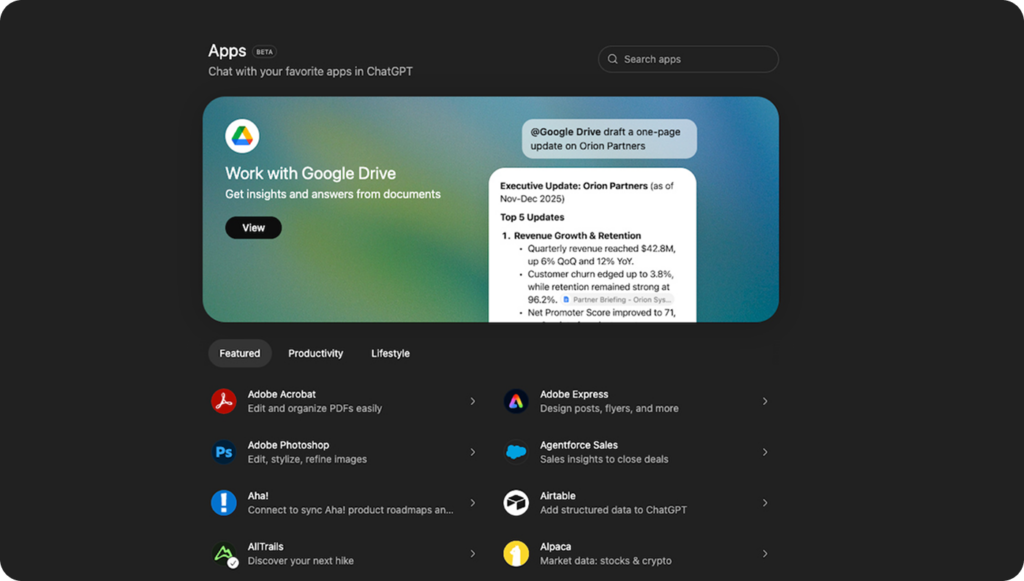
The mobile market has been defined by the Apple and Google duopoly for over a decade. OpenAI is different because of the massive adoption of ChatGPT. If they launch a marketplace for “agents”, software that performs tasks for the user, it represents a new distribution channel that bypasses traditional search logic.
In a traditional app store, discovery happens via a search bar. In an AI store, discovery might happen via conversation and recommendation. For developers working in the AI niche, this is a critical development. If OpenAI launches a store in 2026, it will open a new optimization playground. We are monitoring this closely to see how ranking factors will work on this potential new platform.
Conclusion
The common theme across these updates is that the line between different marketing disciplines is blurring. Paid ads are behaving more like organic results. Organic search is becoming less about keywords and more about user intent.
If your ASO strategy relies on keyword repetition, or if your Apple Search Ads creatives haven’t been updated in months, you are at risk of falling behind. The March 3rd update from Apple is a hard deadline to audit your visual assets and ensure your metadata is optimized for semantics, not just density.
Do you need help adjusting your app promotional strategy? At Keyapp.top, we help app developers and marketers navigate these changes daily. Whether you need to identify the right semantic clusters or want to plan a keyword promotion campaign that signals relevance to the new algorithms, our team is ready to help.
Contact our support team today to discuss your growth strategy for 2026!